
Get your copy
Get your copy


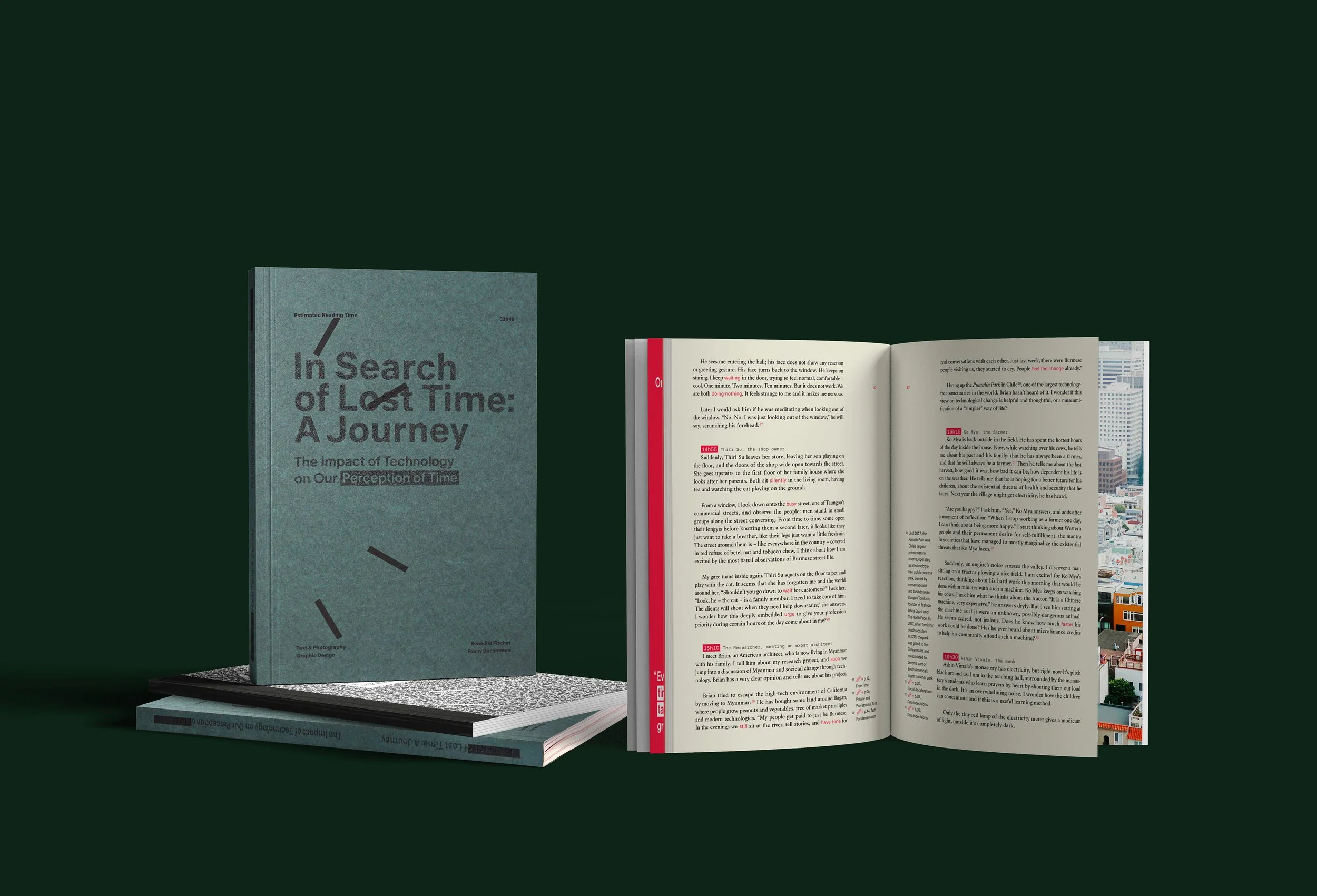
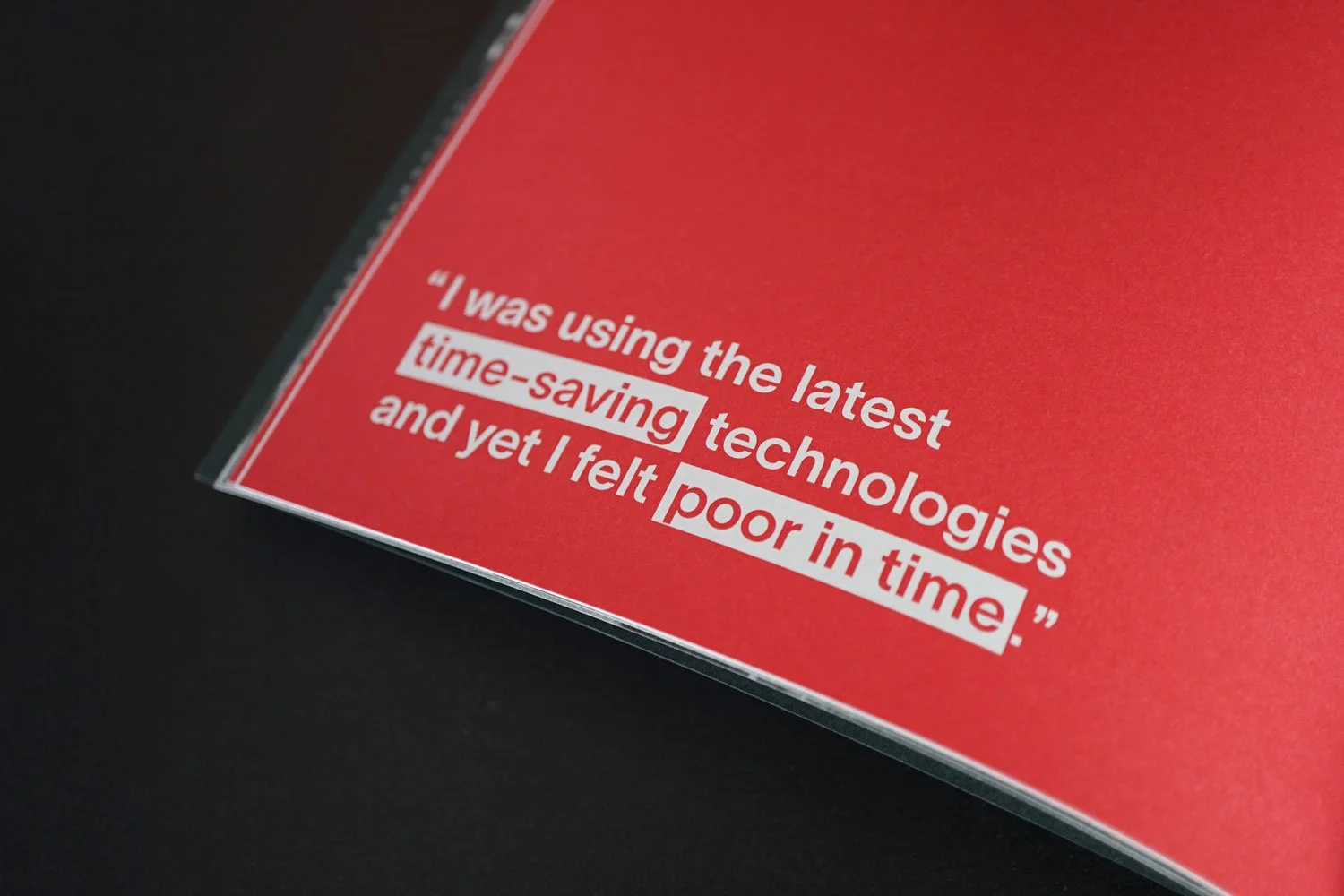
In our everyday lives we use the newest, time-saving technologies but rather than the calm assurance of abundance, we are often stressed and burned out. Rather than rich, we feel poor in time. Where do the promised extra minutes and hours hide? What has happened to our sense of time?
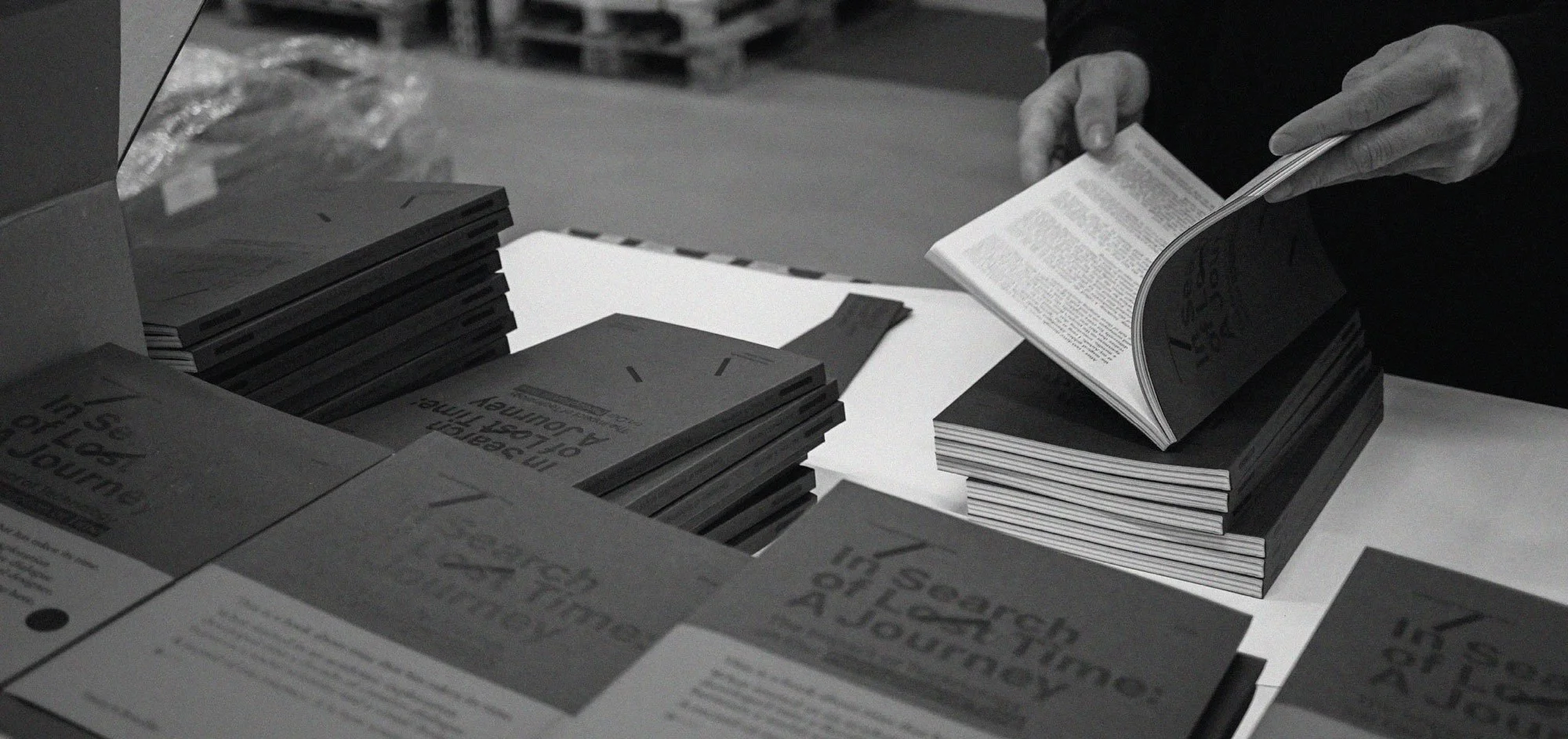
An exploration of two time cultures, In Search of Lost Time takes us on a journey to Silicon Valley’s tech scene and to Myanmar’s countryside, the one rich and the other poor in modern technologies. Shadowing people in their everyday lives and offering reflections on the observed, this book aims to shed light on the relationship between technology and our perception of time.
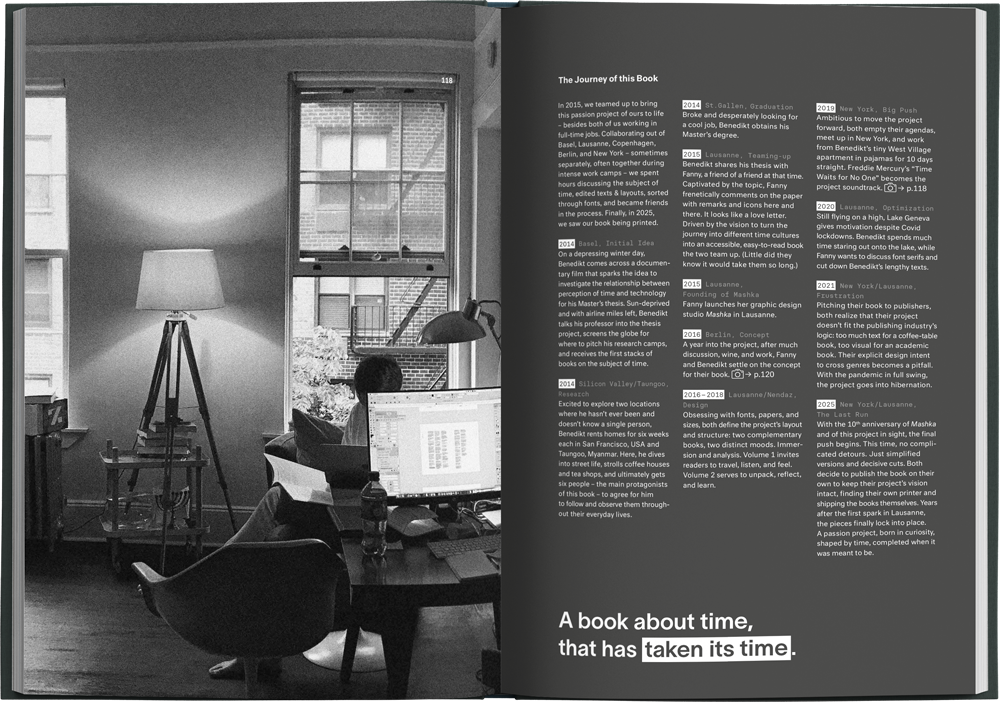
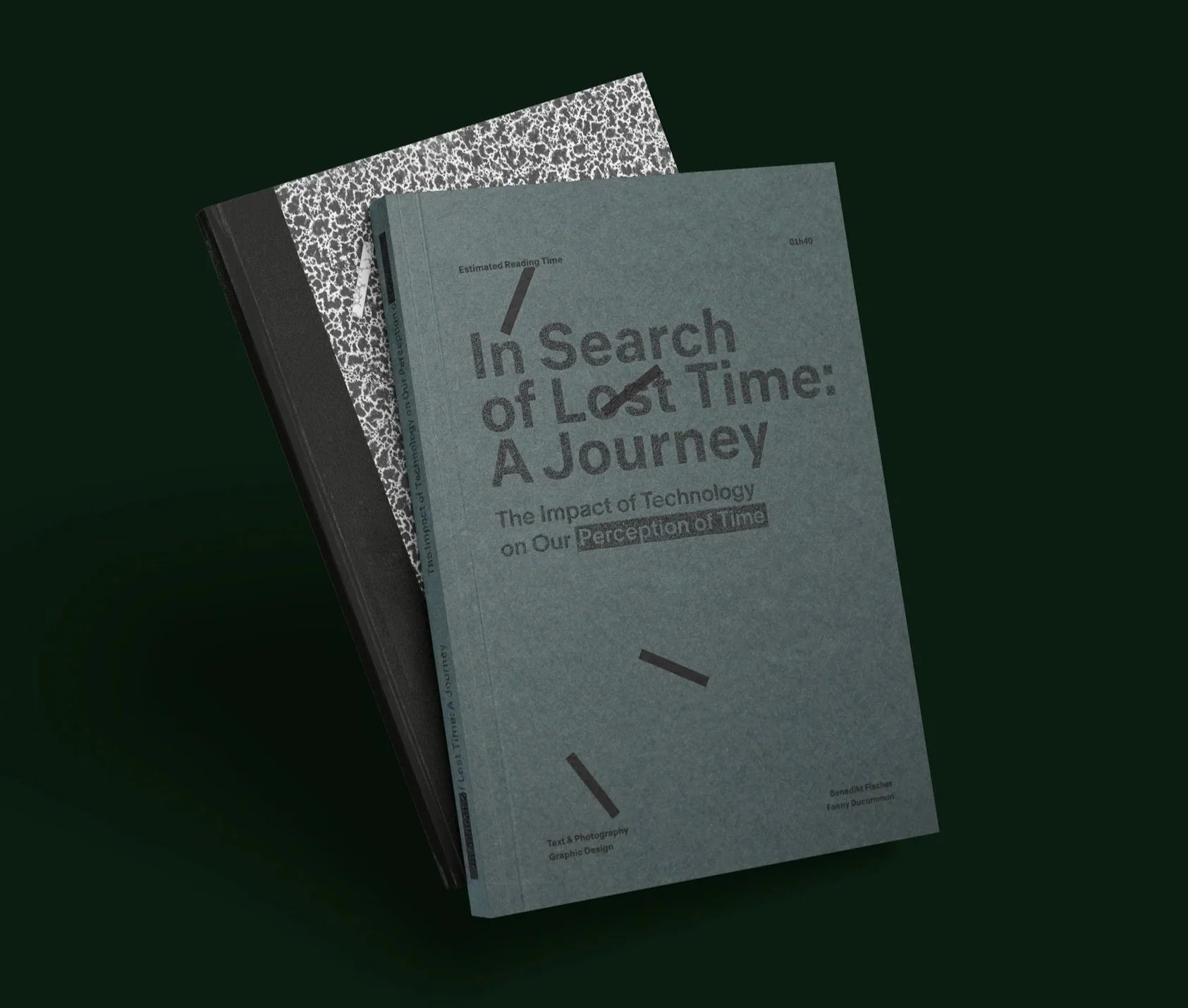
A cross between a research study and a design book, In Search of Lost Time is a dialogue between a social scientist and a visual designer. Originally researched and written as an academic paper, the goal of this book is to make academic thinking broadly accessible and easy to digest, and to display, embody, and represent human’s experience of time in the form of a beautiful object.

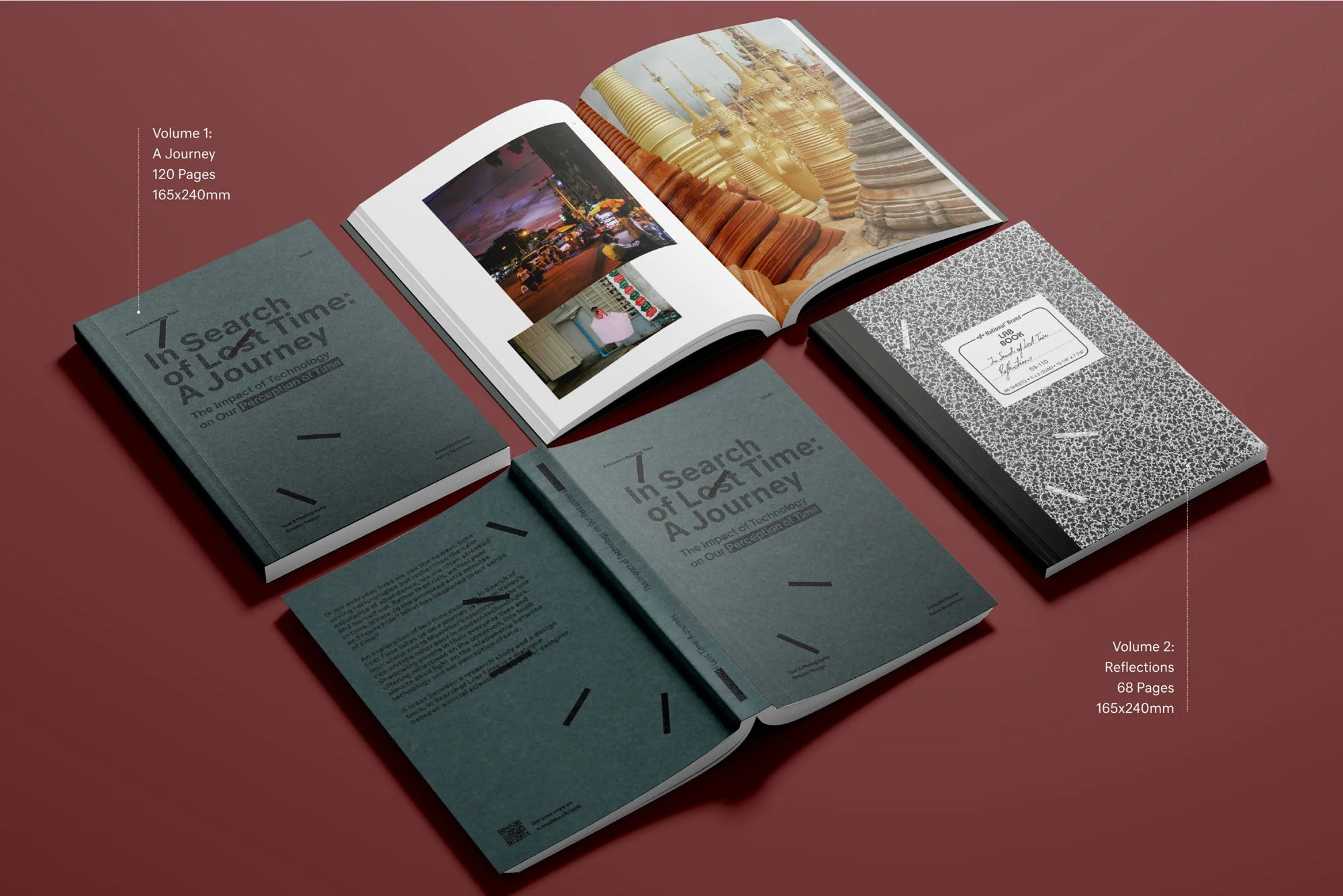
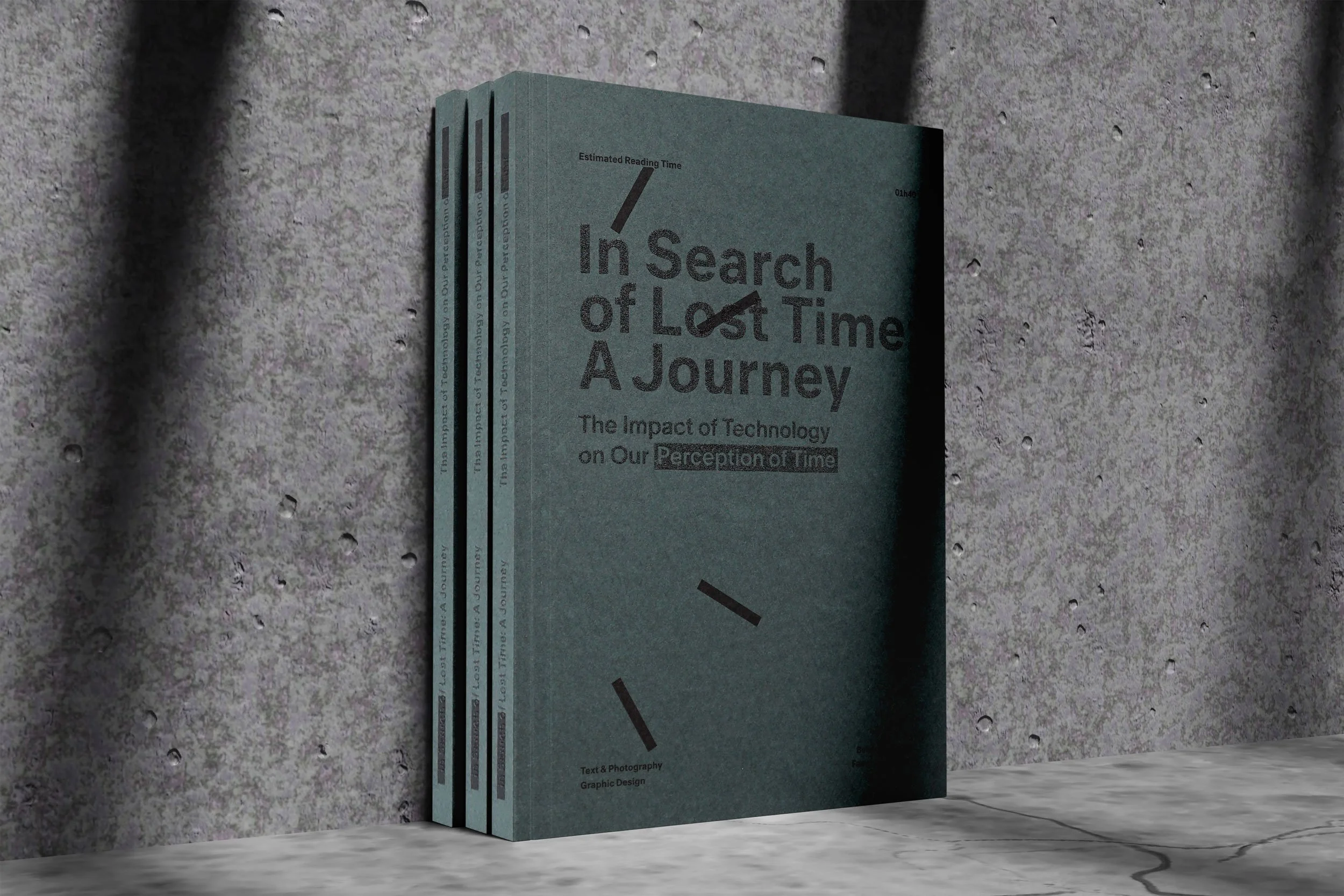
Volume 1 | A Journey
Context & Background
A look into popular and academic conversations about the way information technology has affected the way we spend our time working, learning, and socializing.
Observation & Immersion
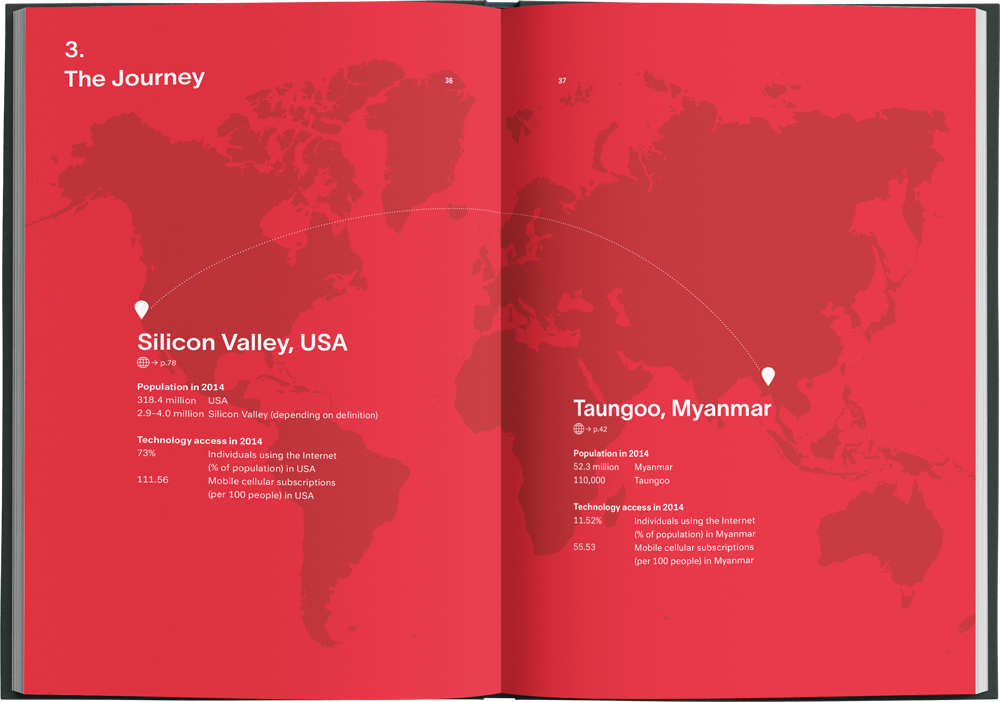
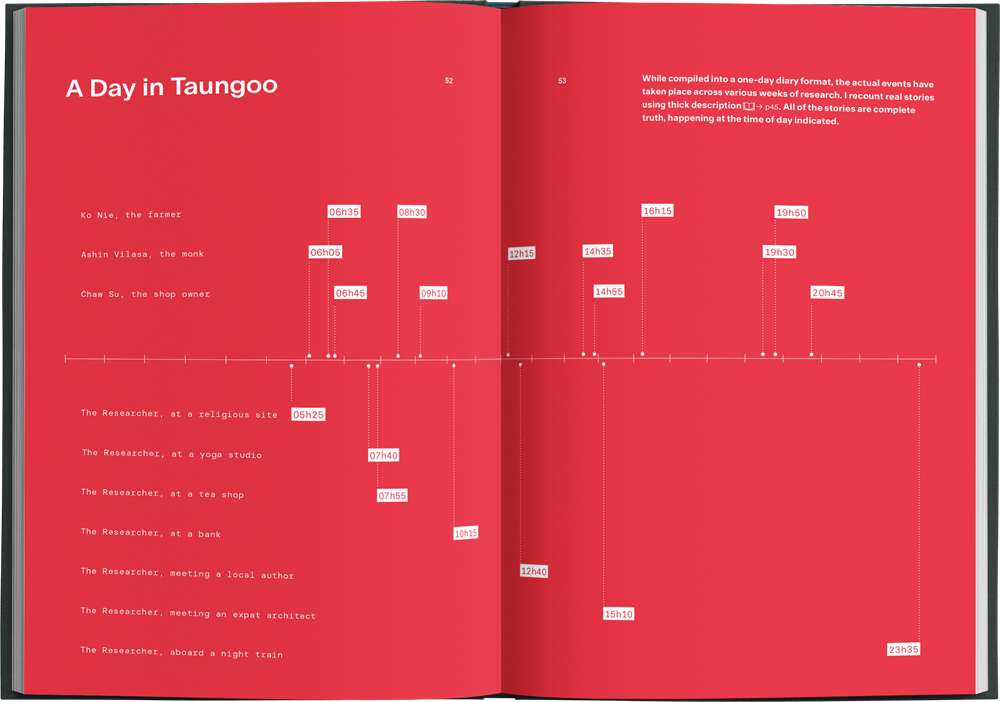
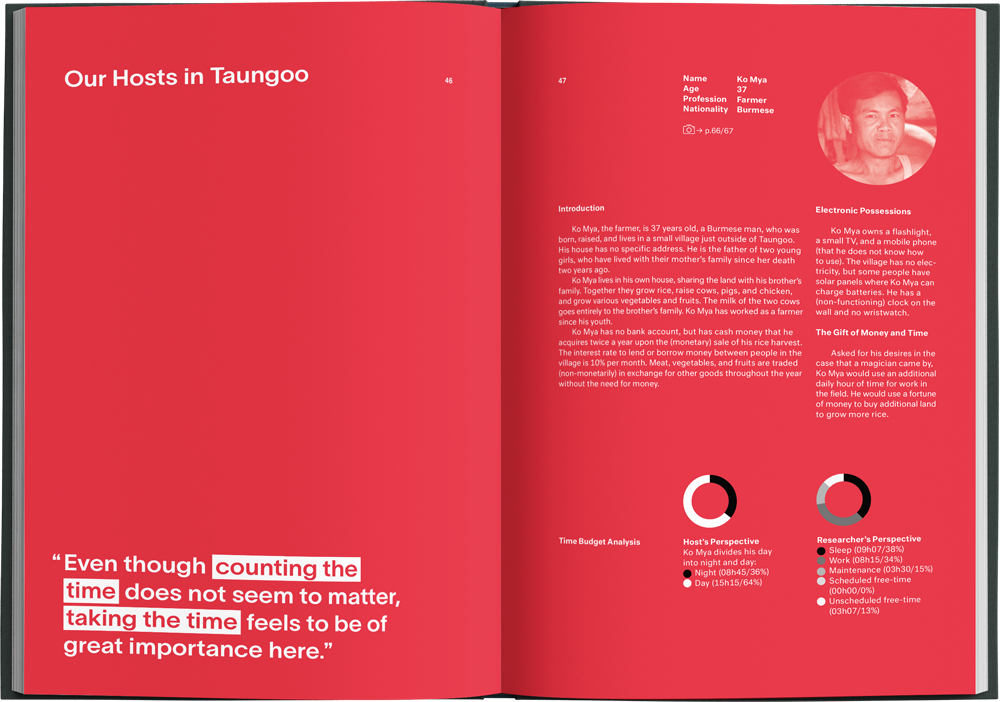
A day in the life of three local residents in Taungoo, Myanmar and a day in the life of three local residents in San Francisco, California. This section focuses on presenting observations, facts, and atmospheres without making judgements or analysis.
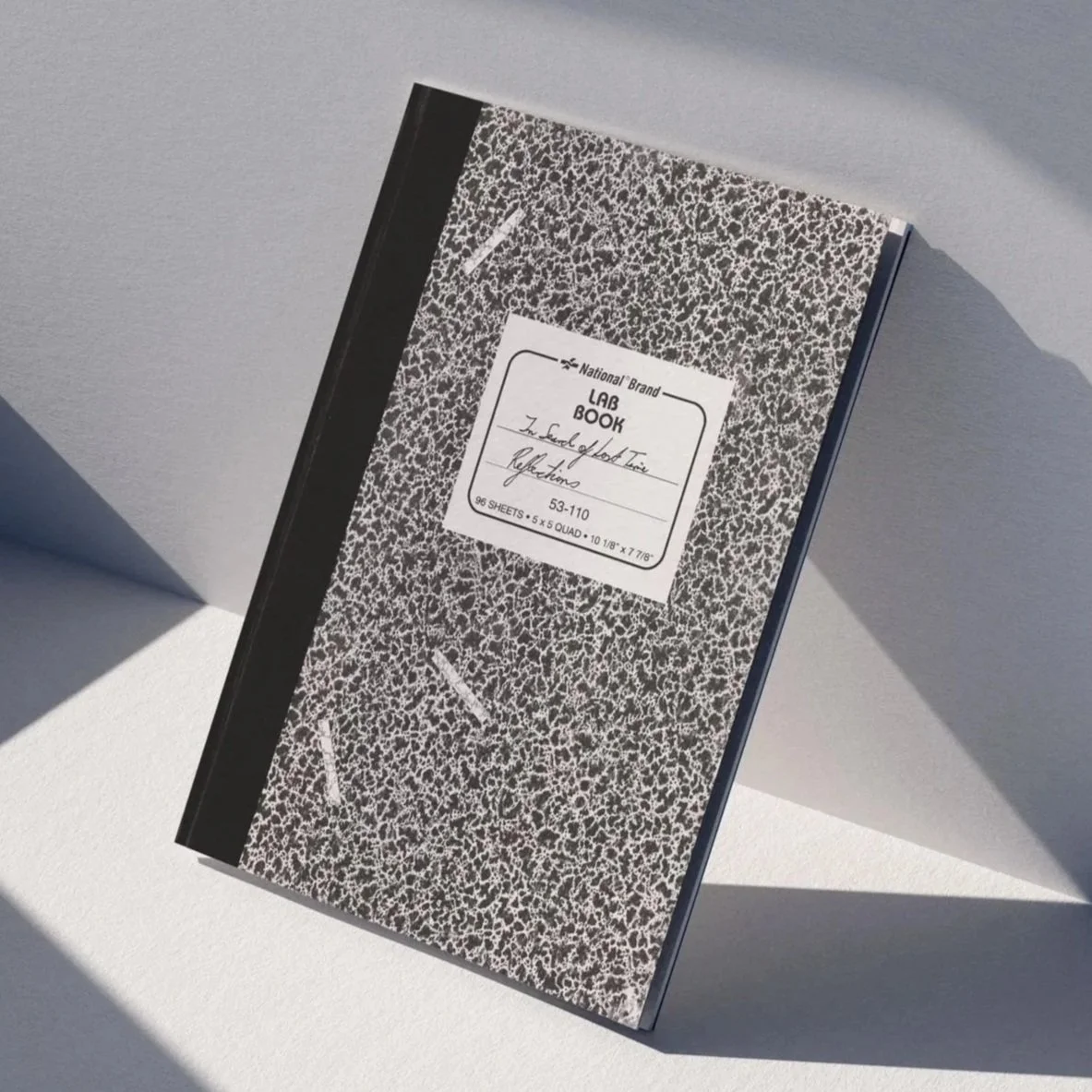
Volume 2 | Reflections
Reflection & Analysis
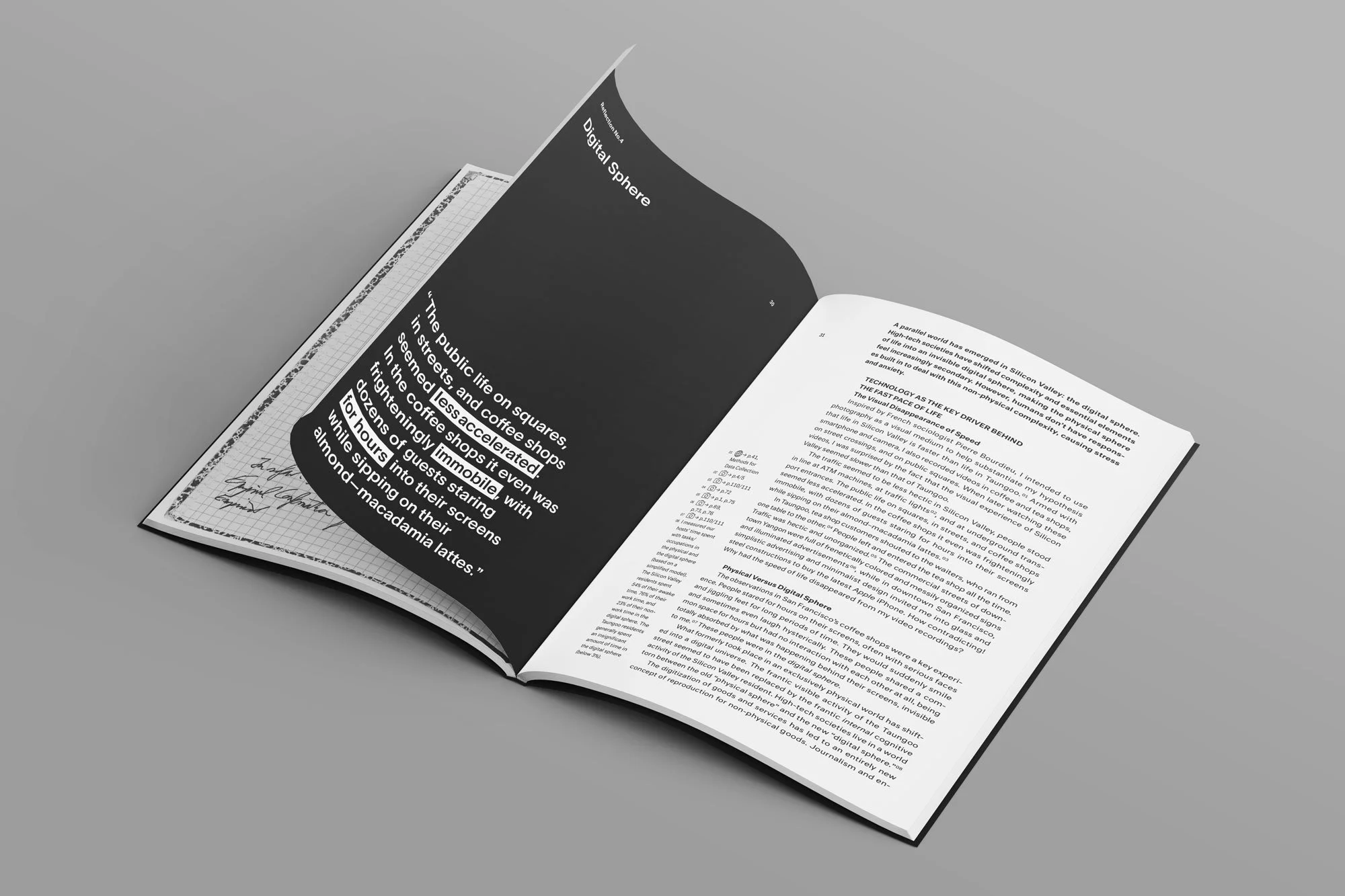
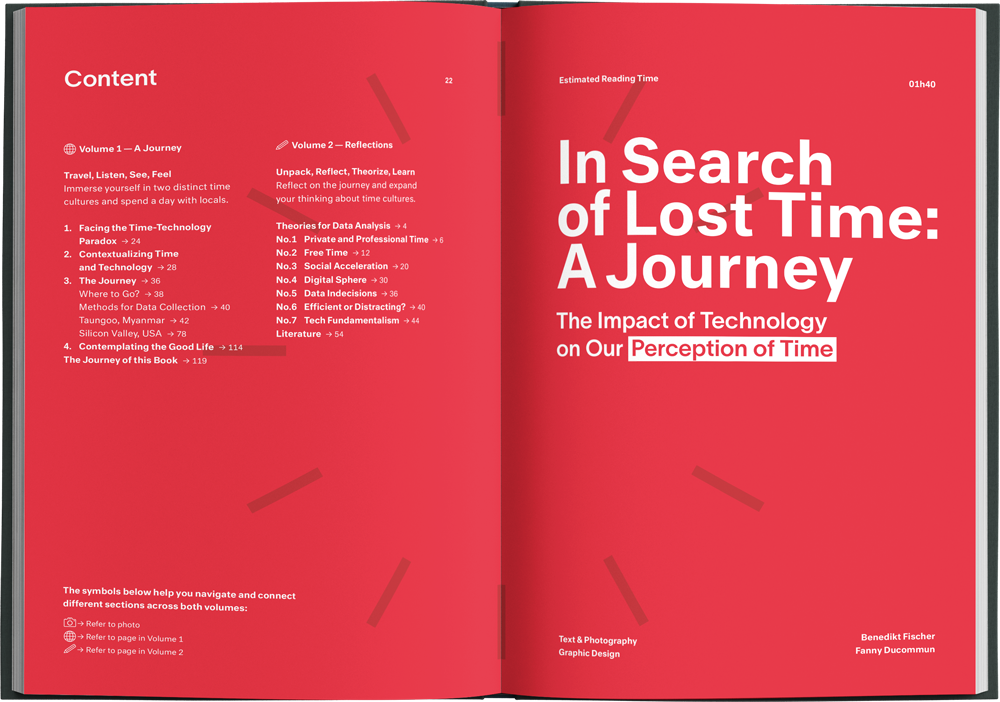
An analysis of the data gathered and the patterns uncovered. This section consists of seven interlinking reflections that define information technology’s place in our time culture and suggest a way forward in defining individual senses of time for ourselves.
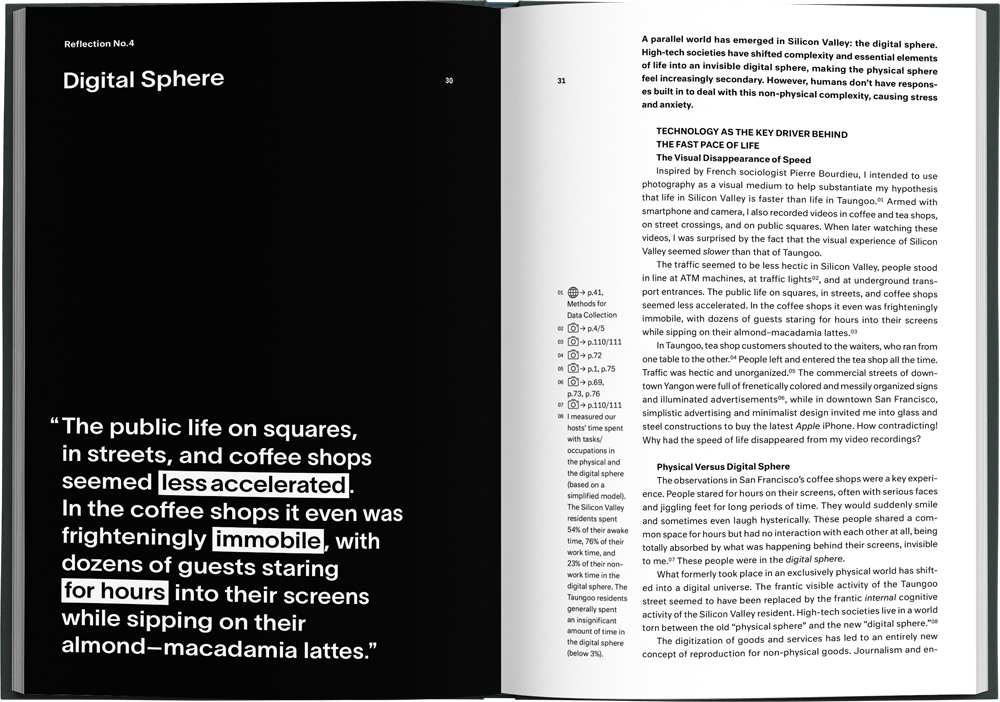
Making an academic text travel further
The content of our book, in its original form, was directed to an academic audience. It cited theory after theory, and layered data collection and analysis methods atop each other to elucidate the relationship between people’s use of information technology and their conception of time. It was a sophisticated treatment of a problem that vexes everybody.
We believe that a text that addresses issues faced by a wide range of people should be available and engaging to a wide range of people. We wanted to find a way to help the original text travel as far as possible while keeping its rigor and reflective power intact. And so, we turned to graphic design to produce a book that welcomes people from various backgrounds, holds busy people’s attention, and encourages people who are used to receiving answers to think for themselves.
Impressum
Benedikt Fischer
Ethnographic Researcher
Benedikt is a researcher and strategist, who uses ethnographic methods. Benedikt holds a Master of Arts in International Affairs & Governance from the University of St.Gallen (HSG) and a Master of Arts in Finance & Strategy from Sciences Po Paris (IEP). He lives in New York.
Fanny Ducommun
Graphic Designer
Fanny is the founder of Switzerland-based design studio Mashka Sàrl. Fanny holds a Bachelor of Arts in Graphic Design from the École cantonale d’art de Lausanne (ECAL). She lives in Lausanne.
ISBN 979-8-218-85760-8
Concept & Editorial Direction
Fanny Ducommun & Benedikt Fischer
Text & Photography
Benedikt Fischer
Graphic Design
Fanny Ducommun
-
Volume 1: 1h40
Volume 2: 1h10 -
165×240mm
Volume 1: 120pages
Volume 2: 68 pages -
SangBleu by Swiss Typefaces (CH)
TWK Lausanne by Weltkern® (CH)
Neutral by Typotheque (NL)
Basier Circle Mono by Atipo foundry (ES) -
All papers are FSC® (Forest Stewardship Council) certified and made from wood sourced from responsibly managed forests.
Volume 1: A Journey
Cover: Lessebo Seaweed 300g/m²
Inside: Lessebo Rough White 120g/m²Volume 2: Reflections
Cover: Turner 300g/m²
Inside: Classic offset paper 90g/m²
-
Volume 1: A Journey
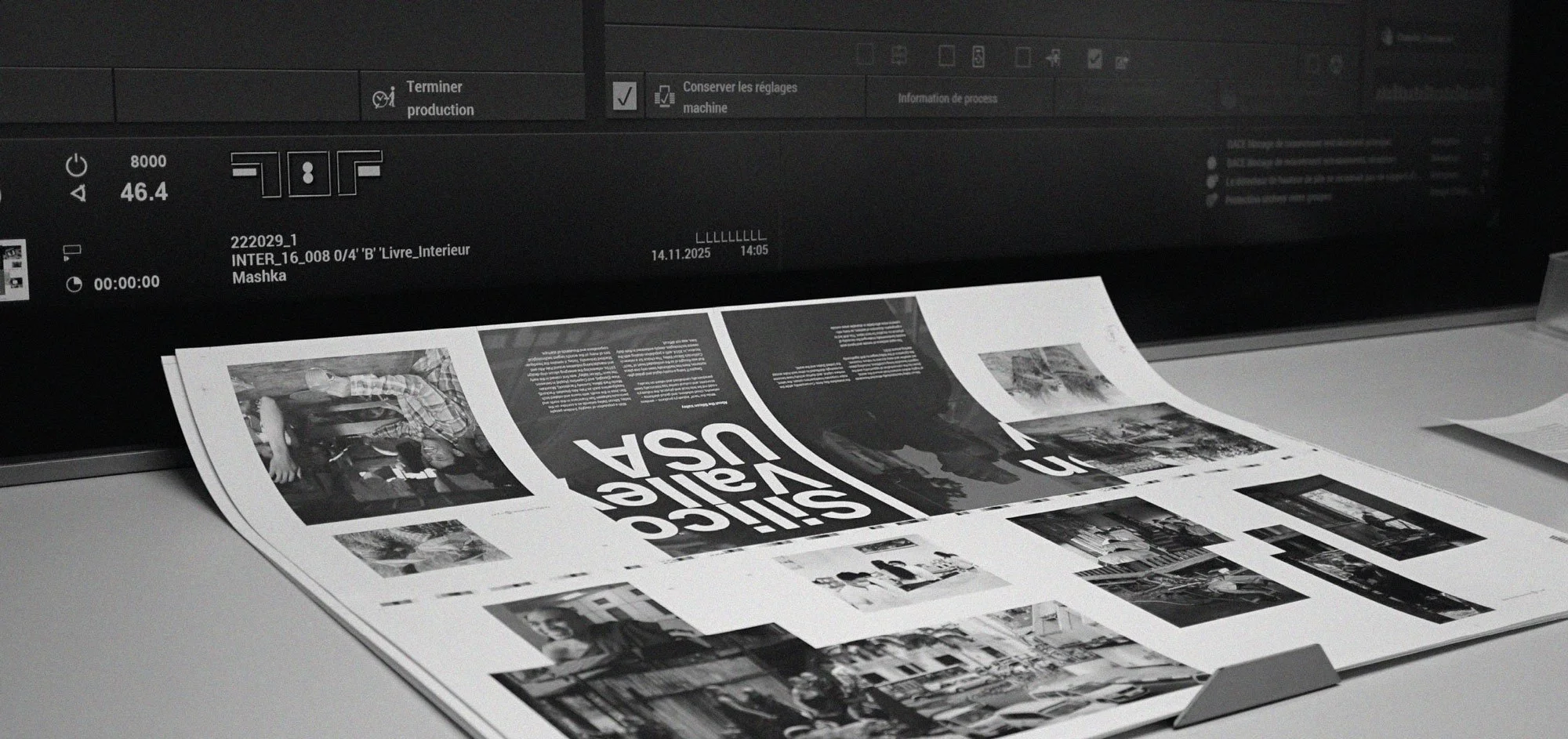
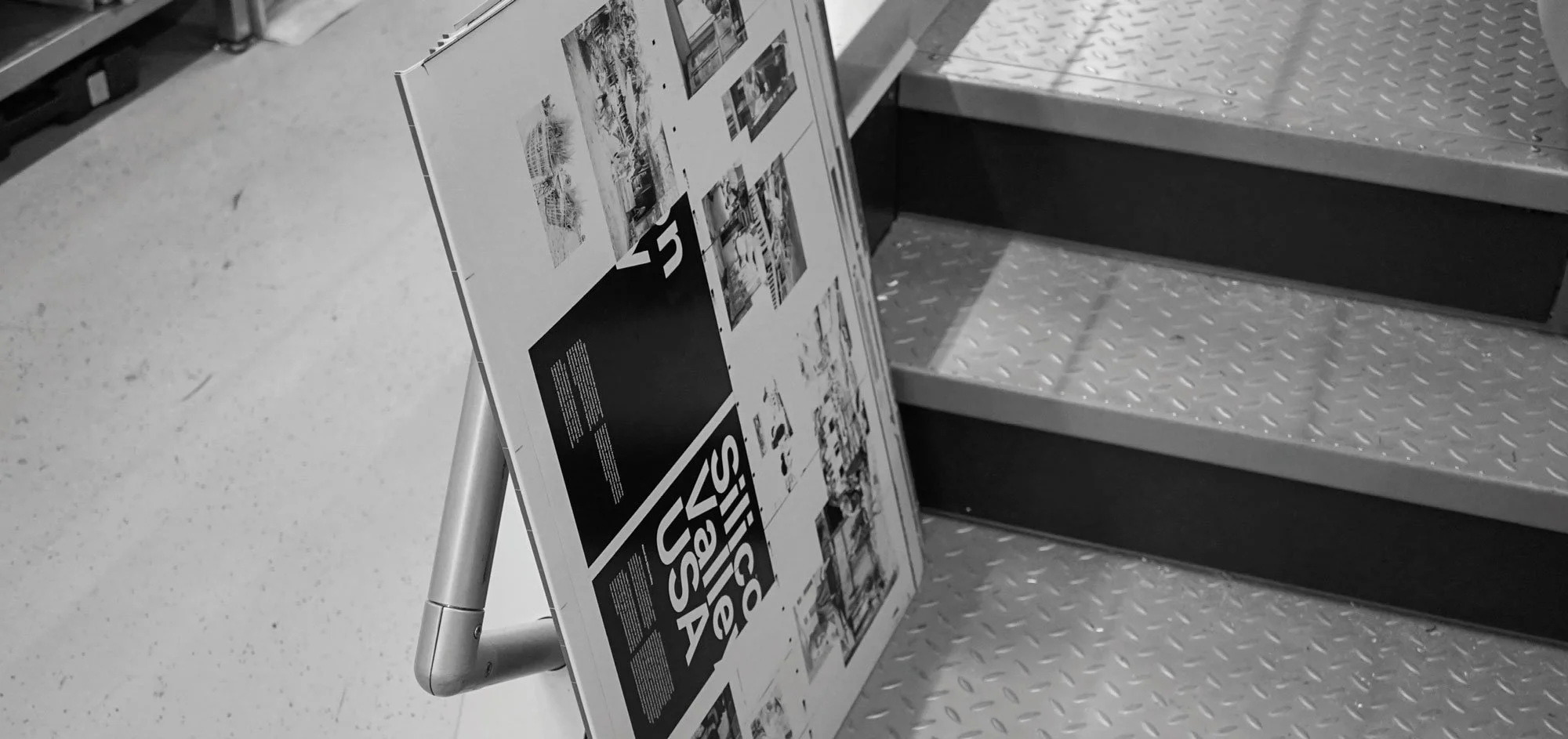
This work was printed in November 2025 on the presses of Polygravia Arts Graphiques SA, Switzerland, in a first edition of 450 copies.
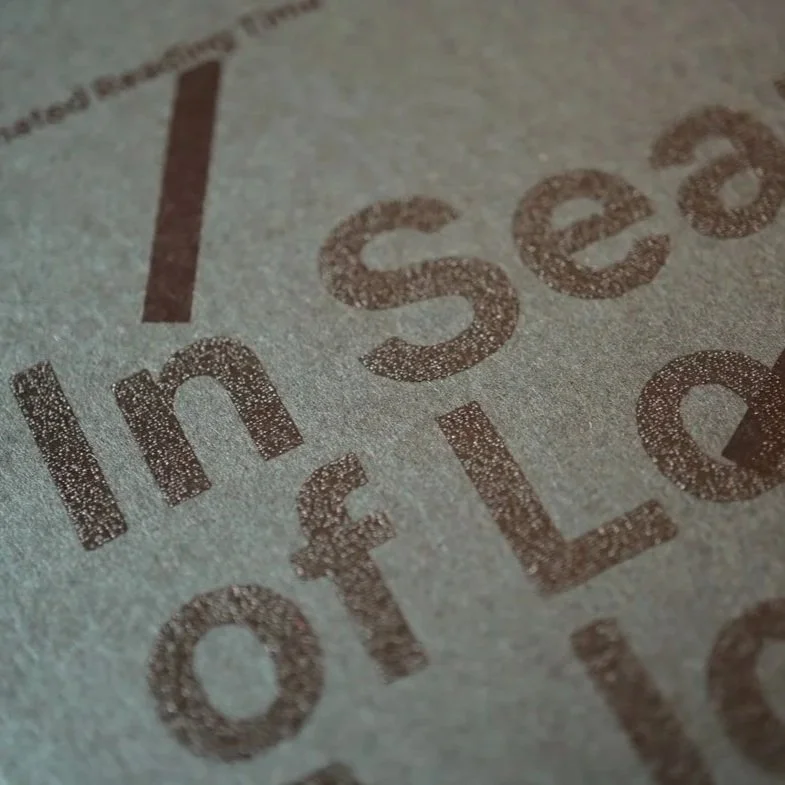
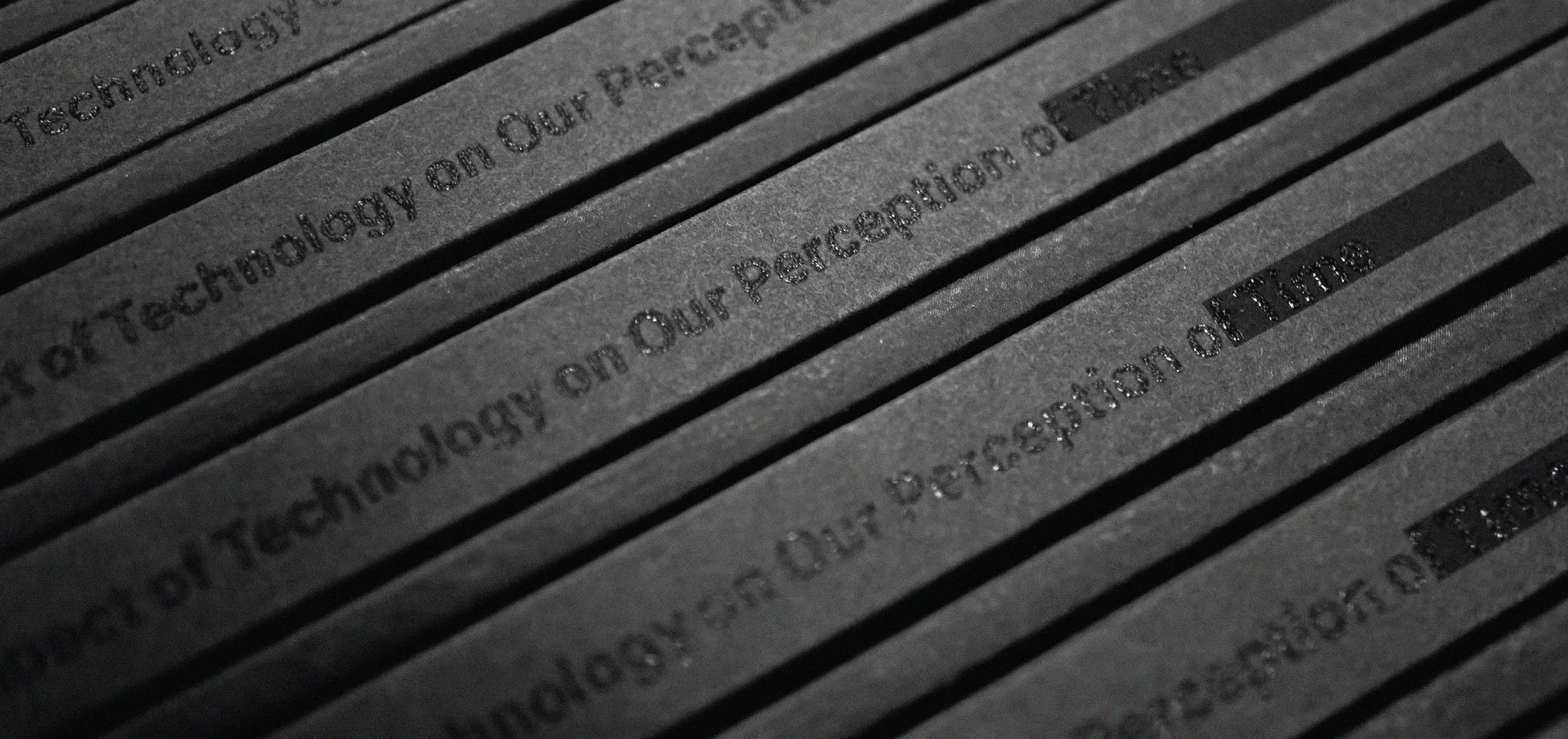
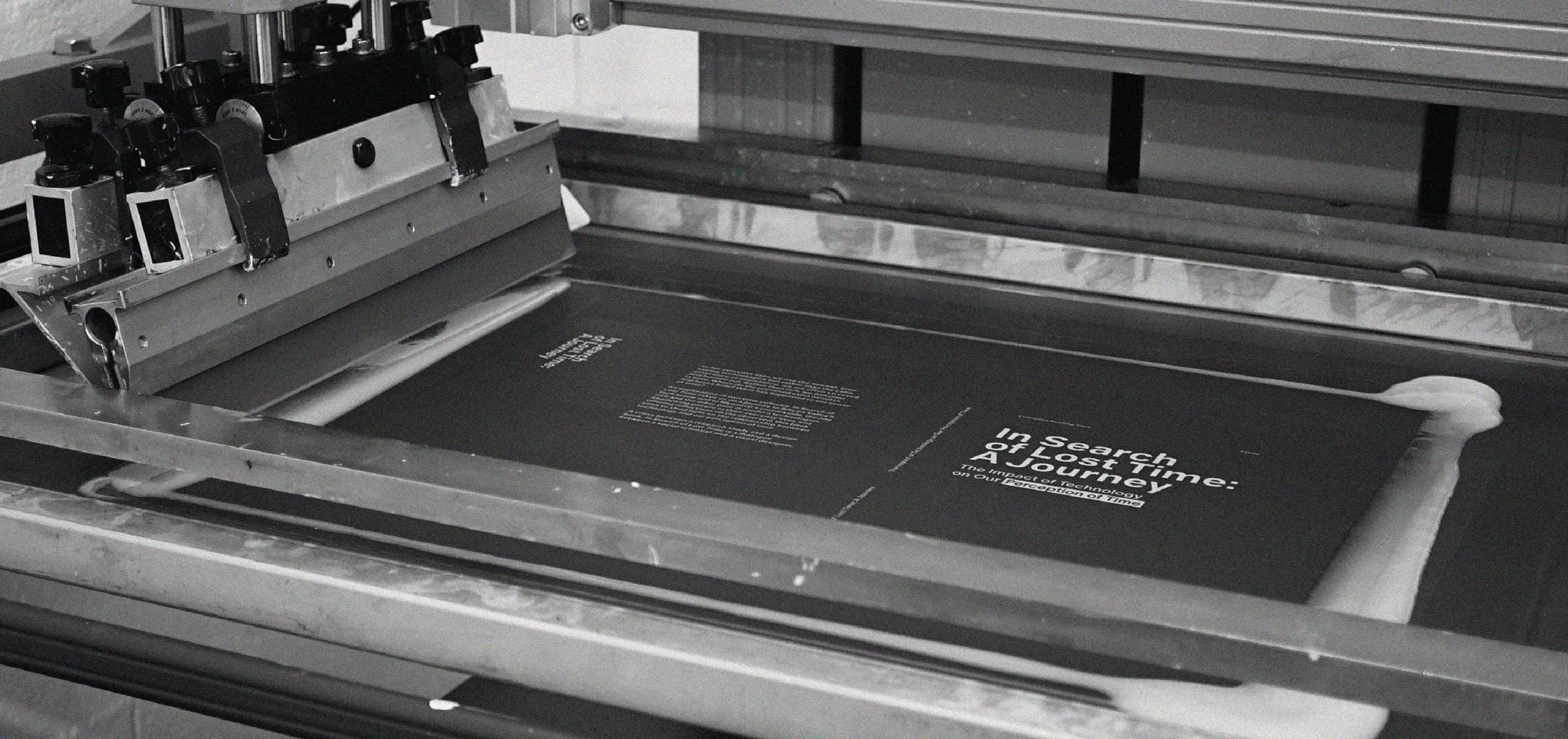
Cover: Offset printing with silkscreen sand varnish finishes
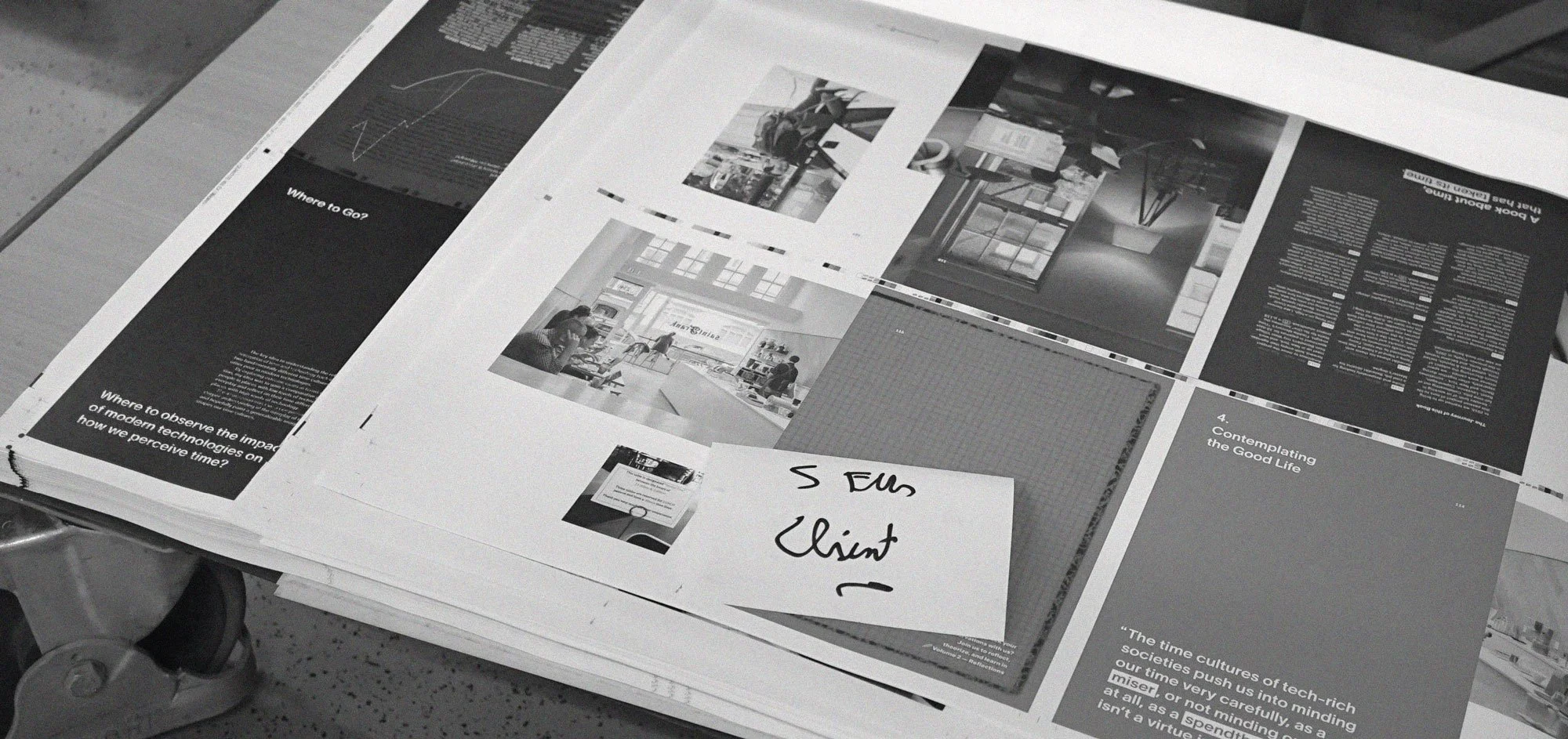
Inside: Offset printing with Polyintense inks
Binding: RS Reliure Service SA, SwitzerlandVolume 2: Reflections
Pixartprinting, Italy -
Distributed by Mashka Sàrl
→ mashka.ch/isolt -
© 2025, Benedikt Fischer & Fanny Ducommun, Mashka Sàrl
All rights reserved. No part of this publication may be reproduced, stored in a retrieval system, or transmitted in any form or by any means – electronic, mechanical, photocopying, recording, or otherwise – without the prior permission of the publisher.
This work originates from a research project. While the narratives are based on real people and situations, pseudonyms are used and identifying details have been altered to protect individuals’ privacy.
-
Thank you to our hosts in Taungoo and Silicon Valley who let us shadow their everyday lives, to the University of St.Gallen where this project started, to Polygravia Arts Graphiques SA for their support in bringing this book into the real world, and to our friends and families who encouraged us along the way.
Our design strategy:
Reaching a wide audience
Centering the text on people
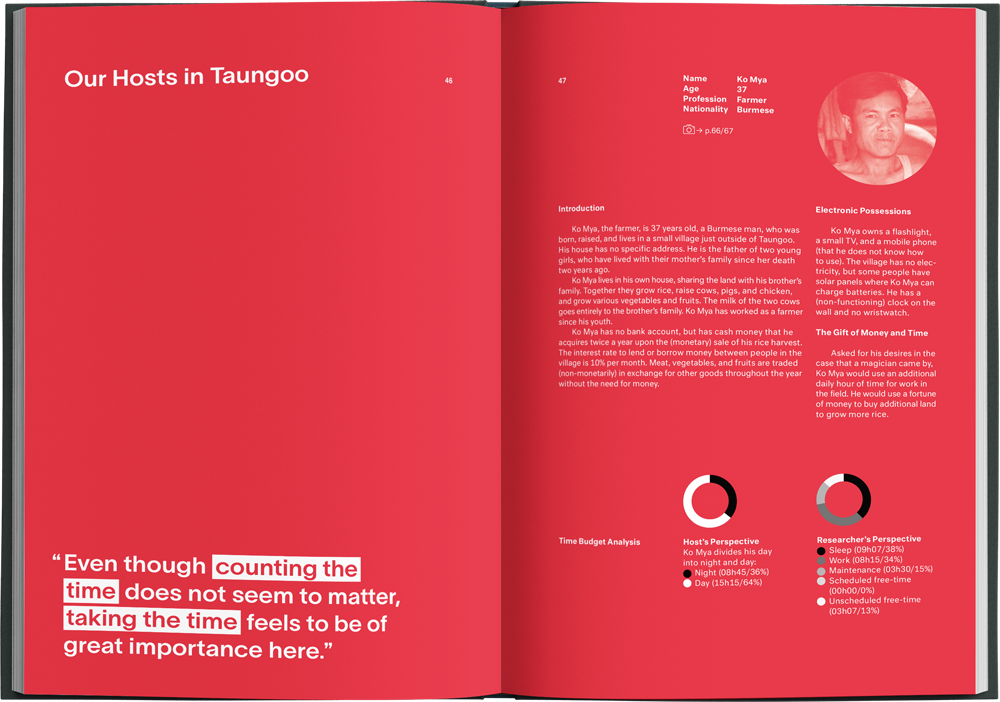
By focussing on ordinary people — our hosts and research subjects — we invite readers from a wide range of audiences to make an emotional connection to the characters that breathe life into the topics discussed.
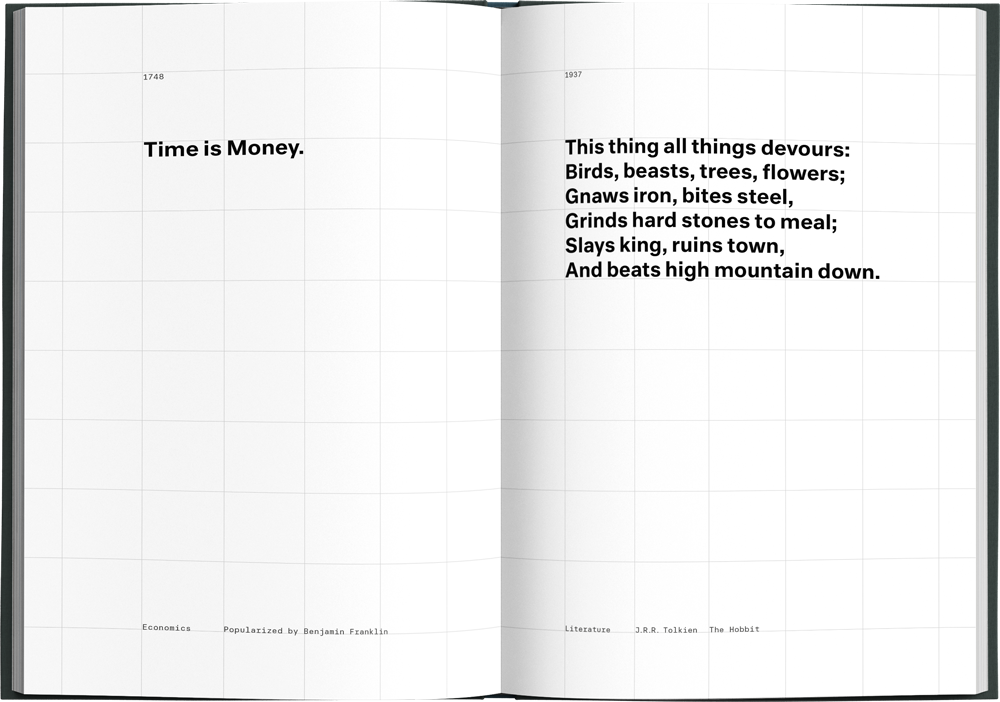
Beginning the book with a funnel of perspectives from various areas of interest
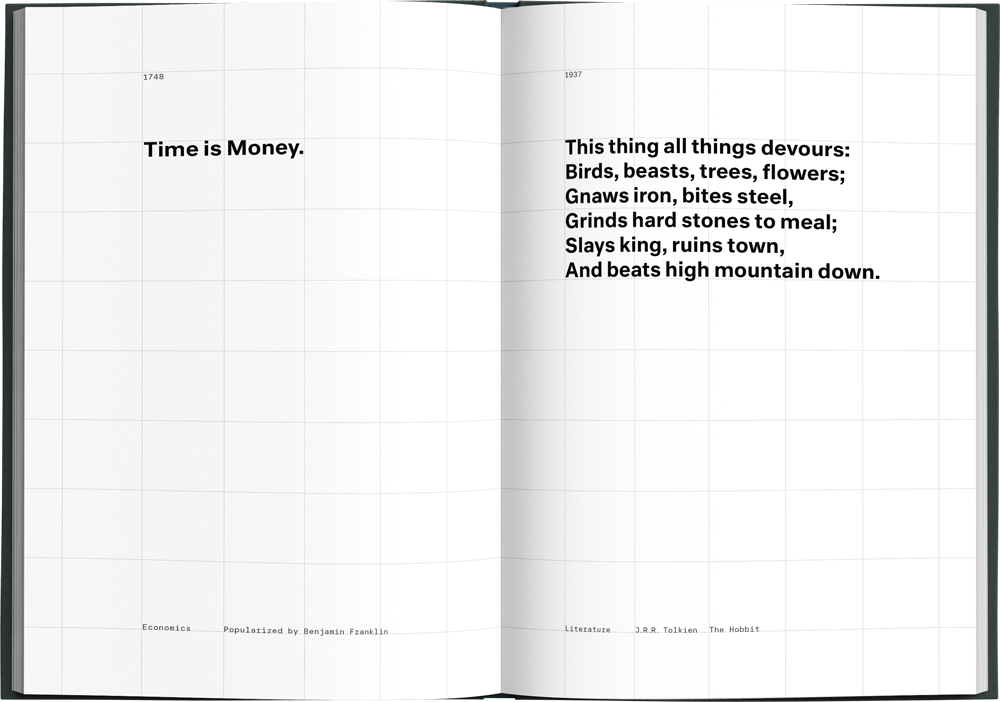
By funneling the reader into the book through a series of quotes about time from a variety of areas of interest, we bring readers from across backgrounds into the content of the book with a light and open tone.
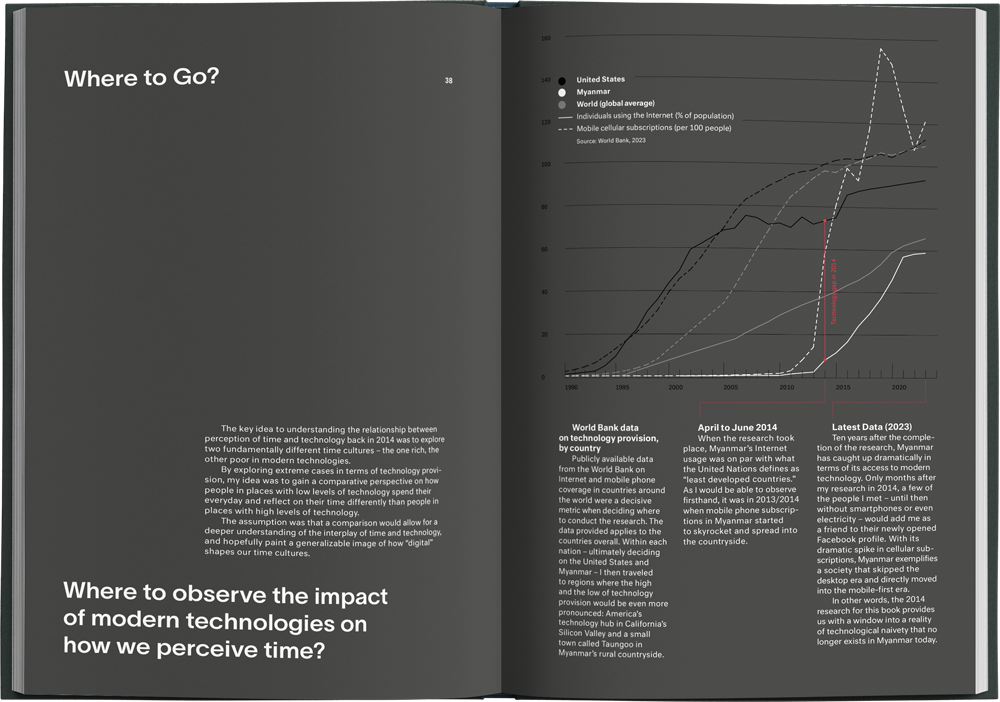
Providing toolkits
By providing concise descriptions of the methods and theories used in the book, we empower readers with toolkits so that they can see and think along the process by which observations become insights.
Engaging busy people
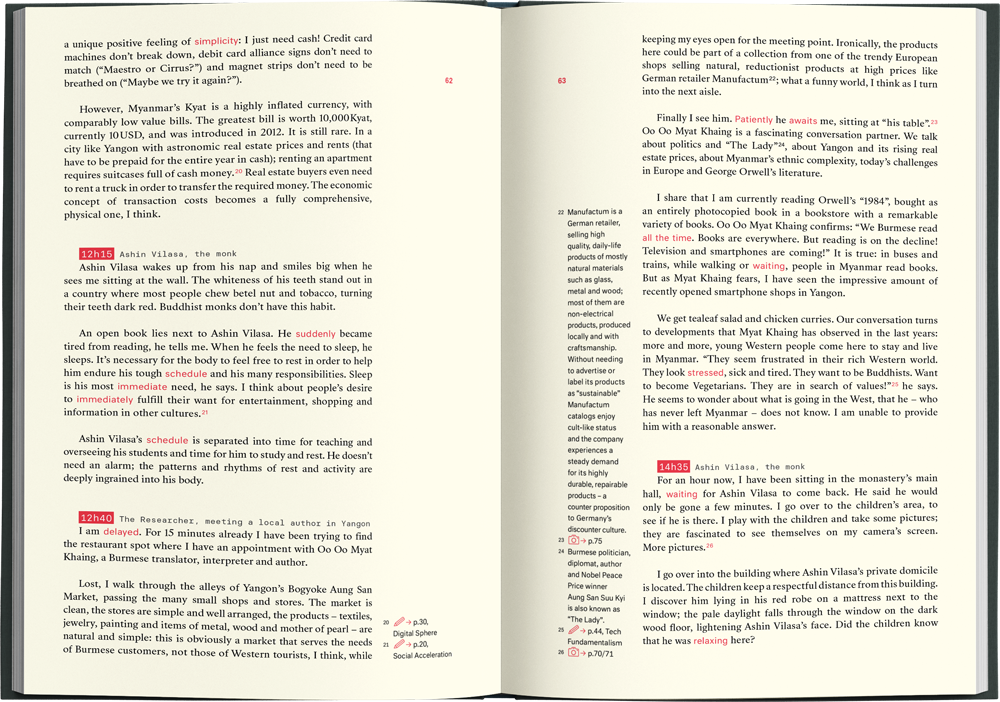
Structuring the book so that it’s comfortable to put the book down and pick it back up
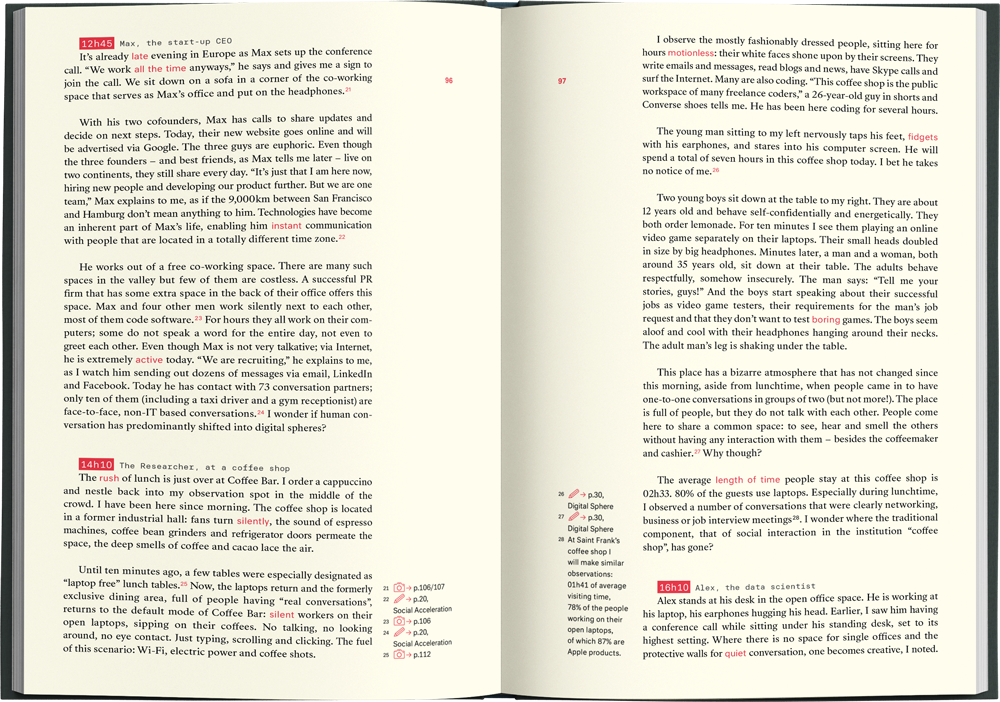
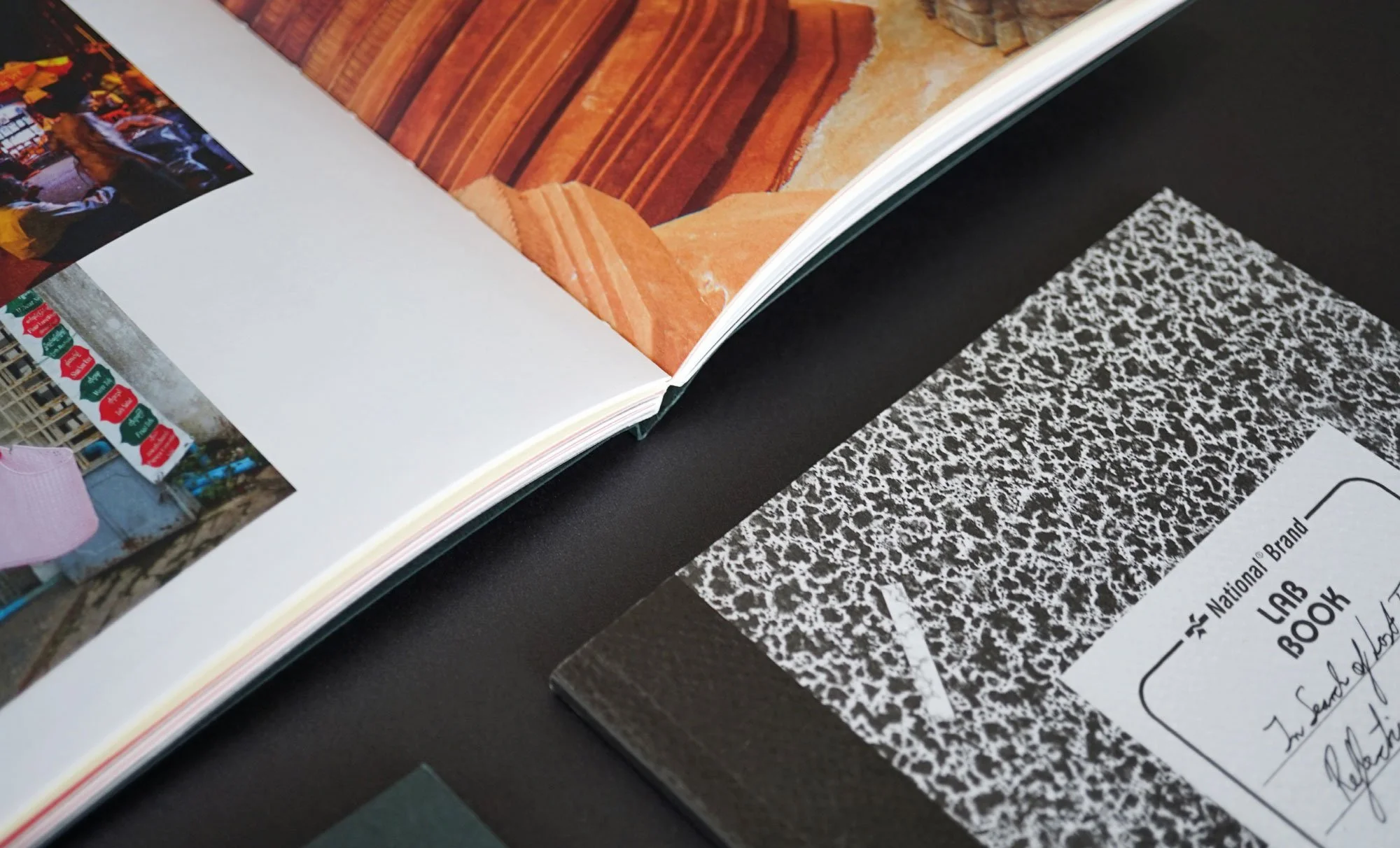
By giving each section of the book its own design flavor — the observations are presented as a book-within-a-book and the reflections are presented in easy-to-digest chapters — we provide readers with straightforward ways to chunk their engagement with the content.
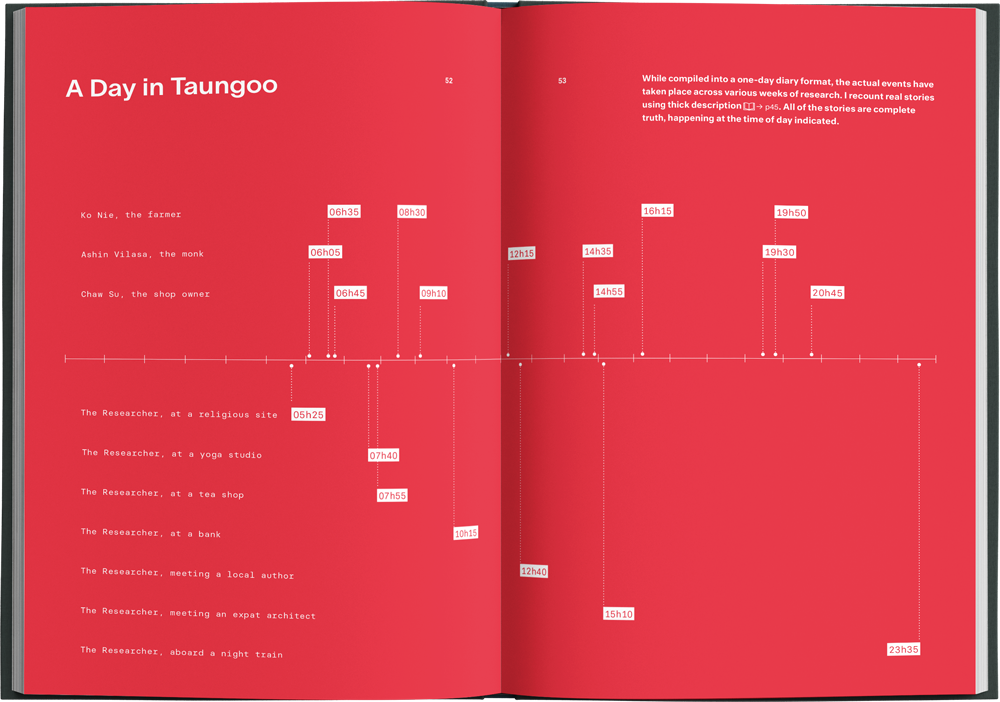
Portraying people throughout a 24-hour day
By structuring observations from the field into a 24-hour day, we give readers a story that they can easily and enjoyably follow.
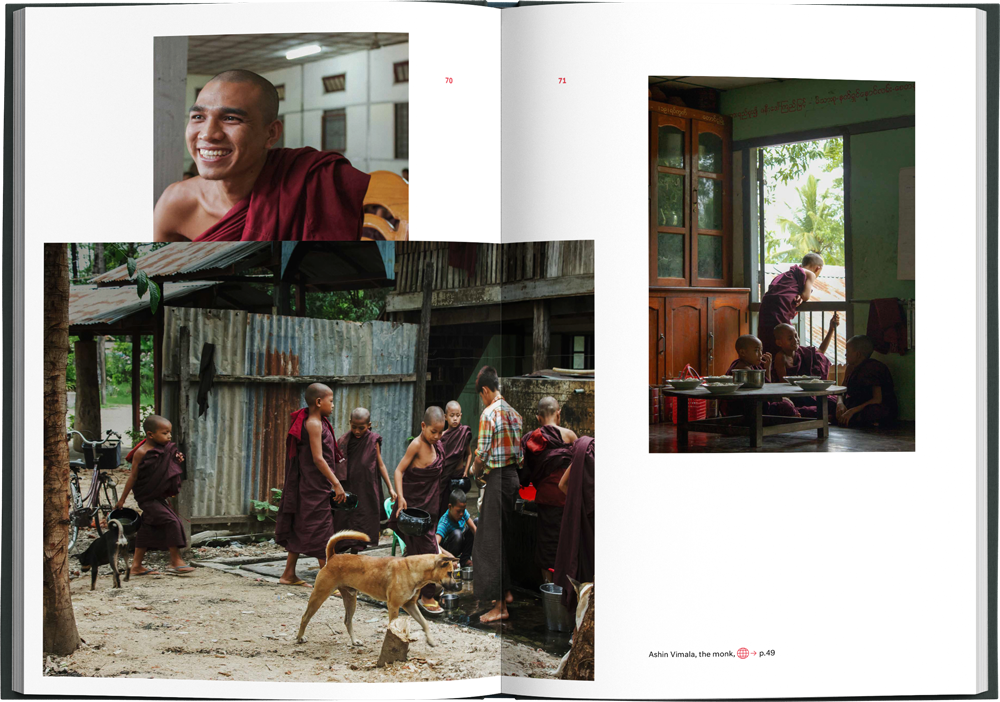
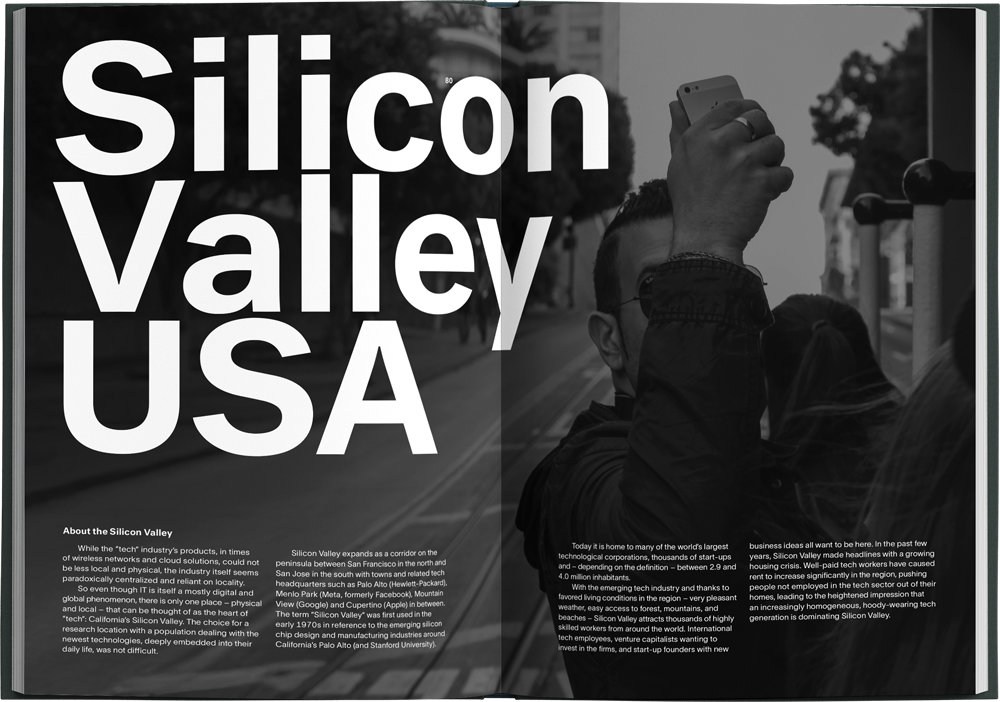
Showing photographs from people’s everyday lives
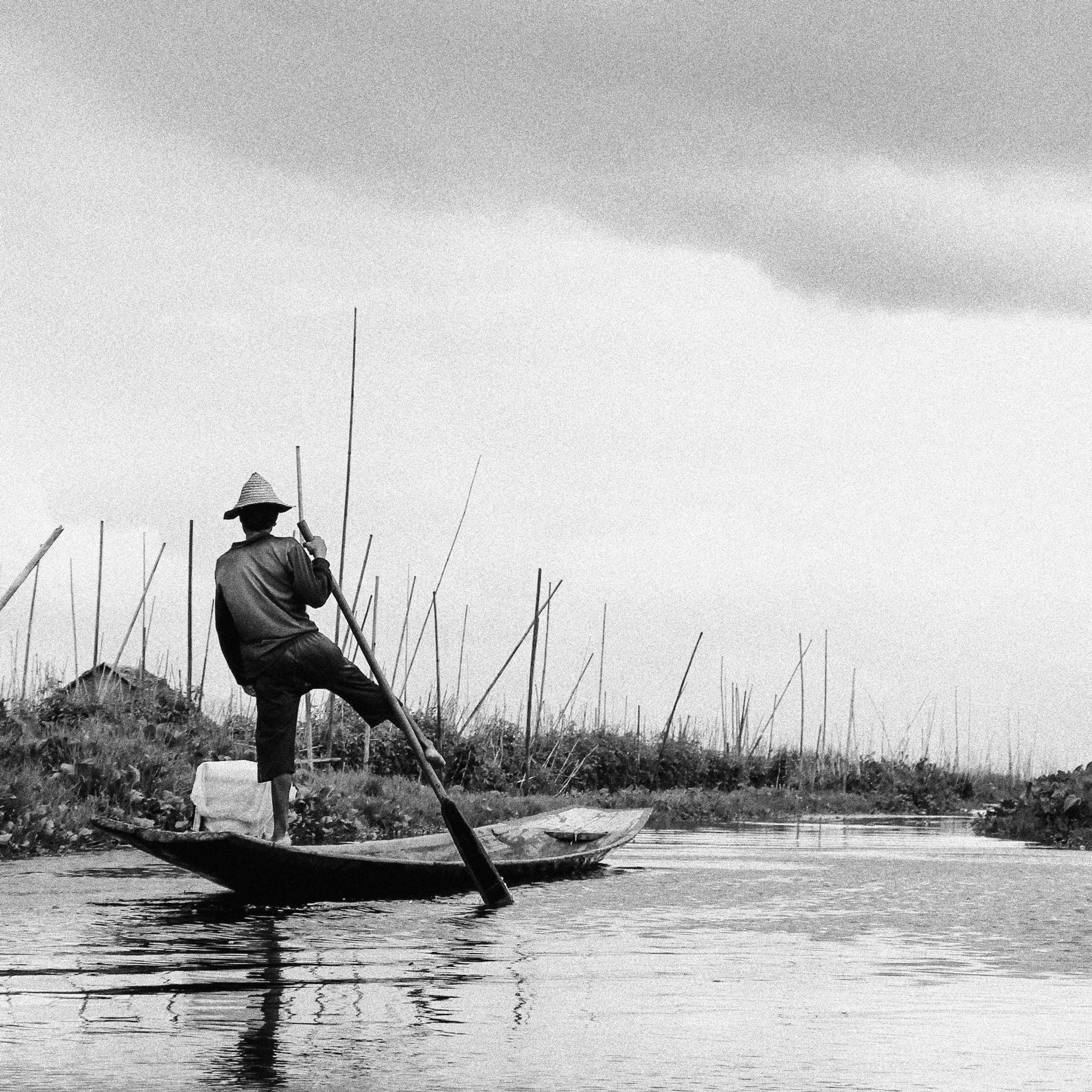
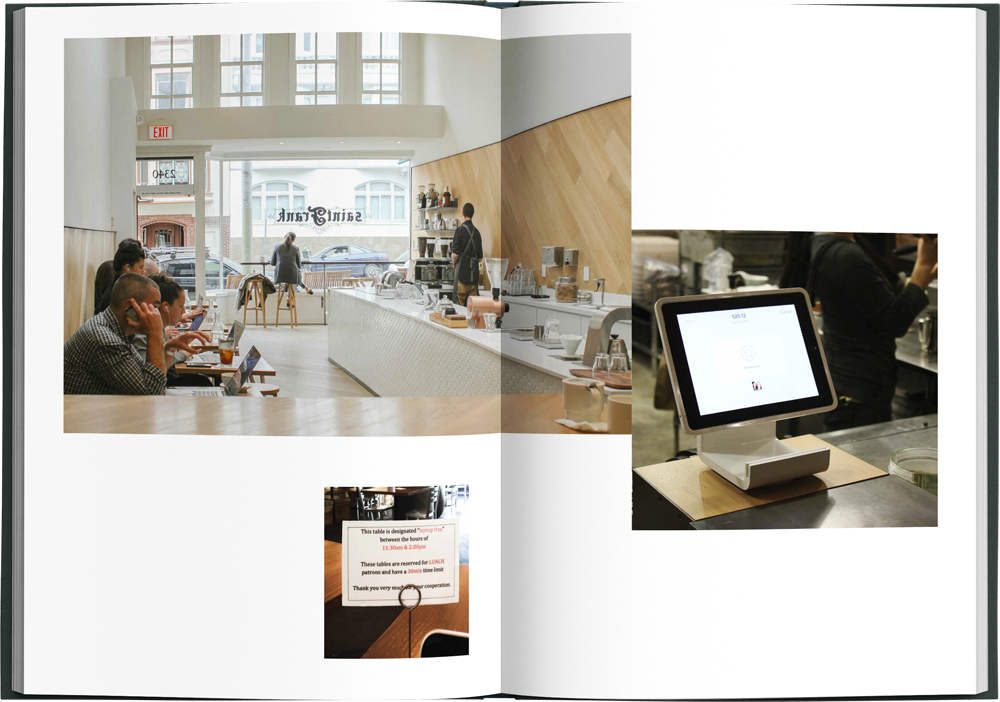
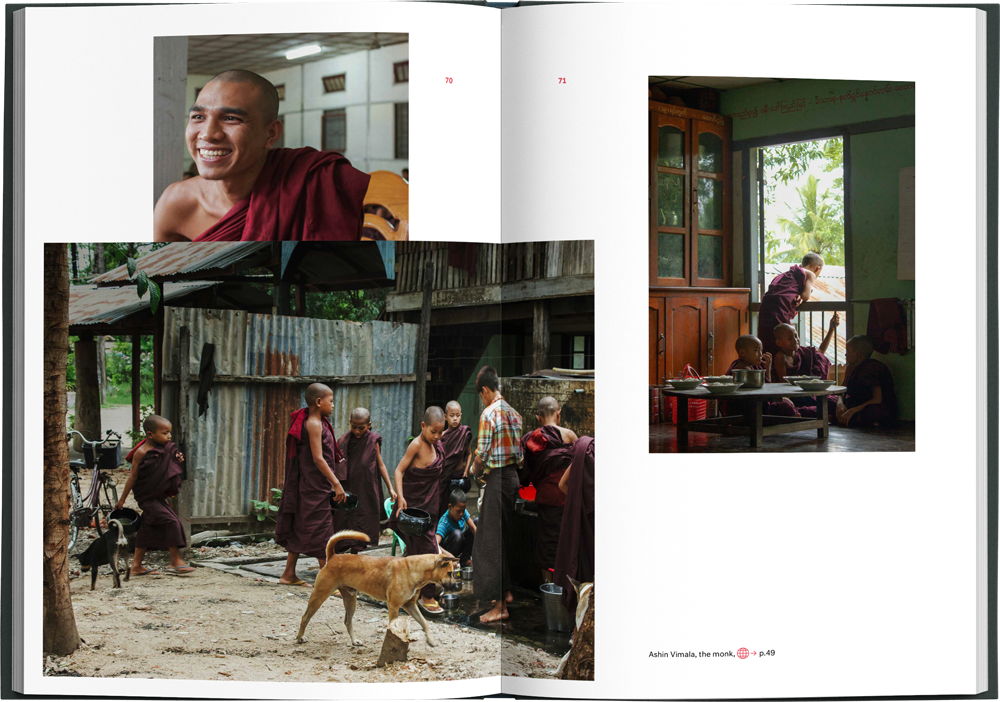
By showing photographs from people’s everyday lives, we break up the text with images that are emotionally engaging.
Encouraging readers to think for themselves
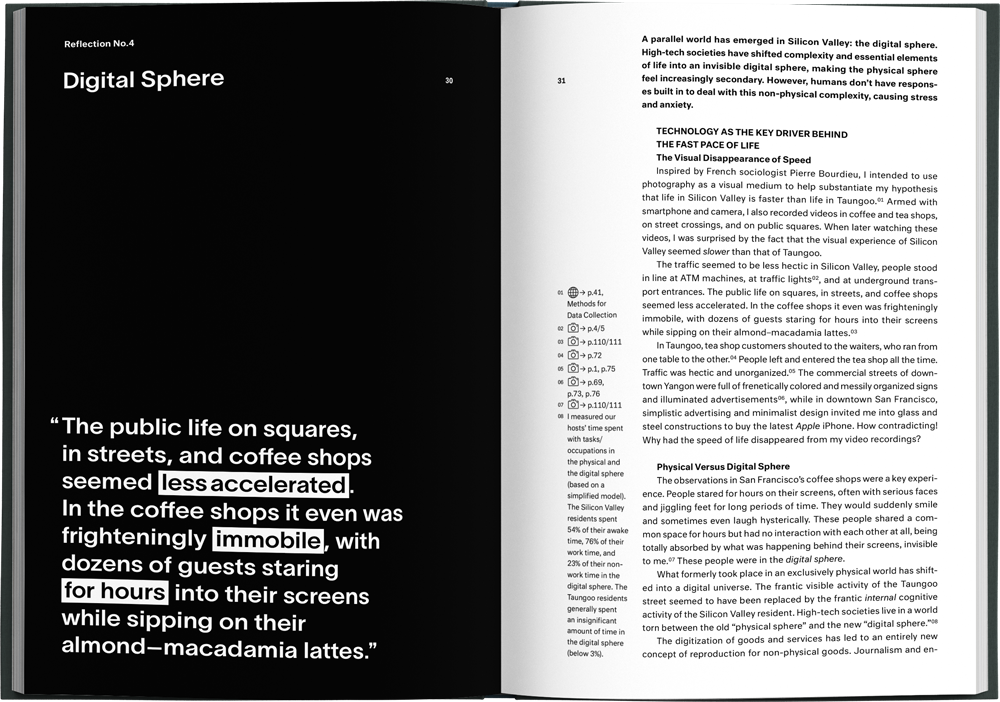
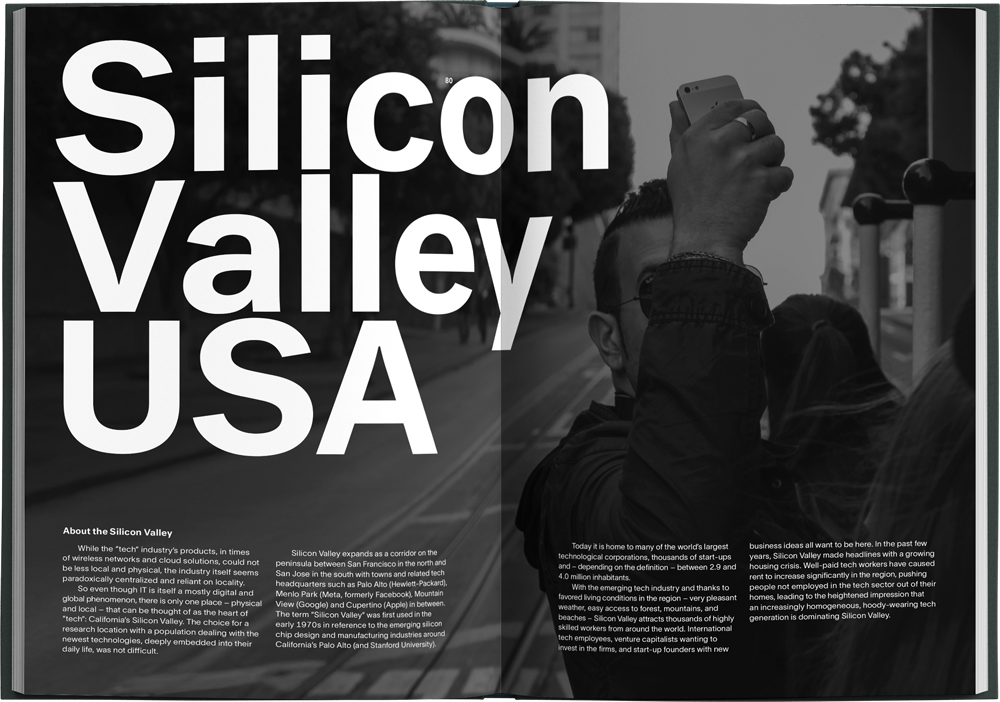
Two distinct volumes going hand in hand that distinguish between immersion and reflection
By making a distinction between observations and analysis — the immersive content in a premium-feel Volume 1, the reflective content in a more simple, clean Volume 2 — we provide a nudge to readers to fill the space between the two modes of thought with their own ideas.
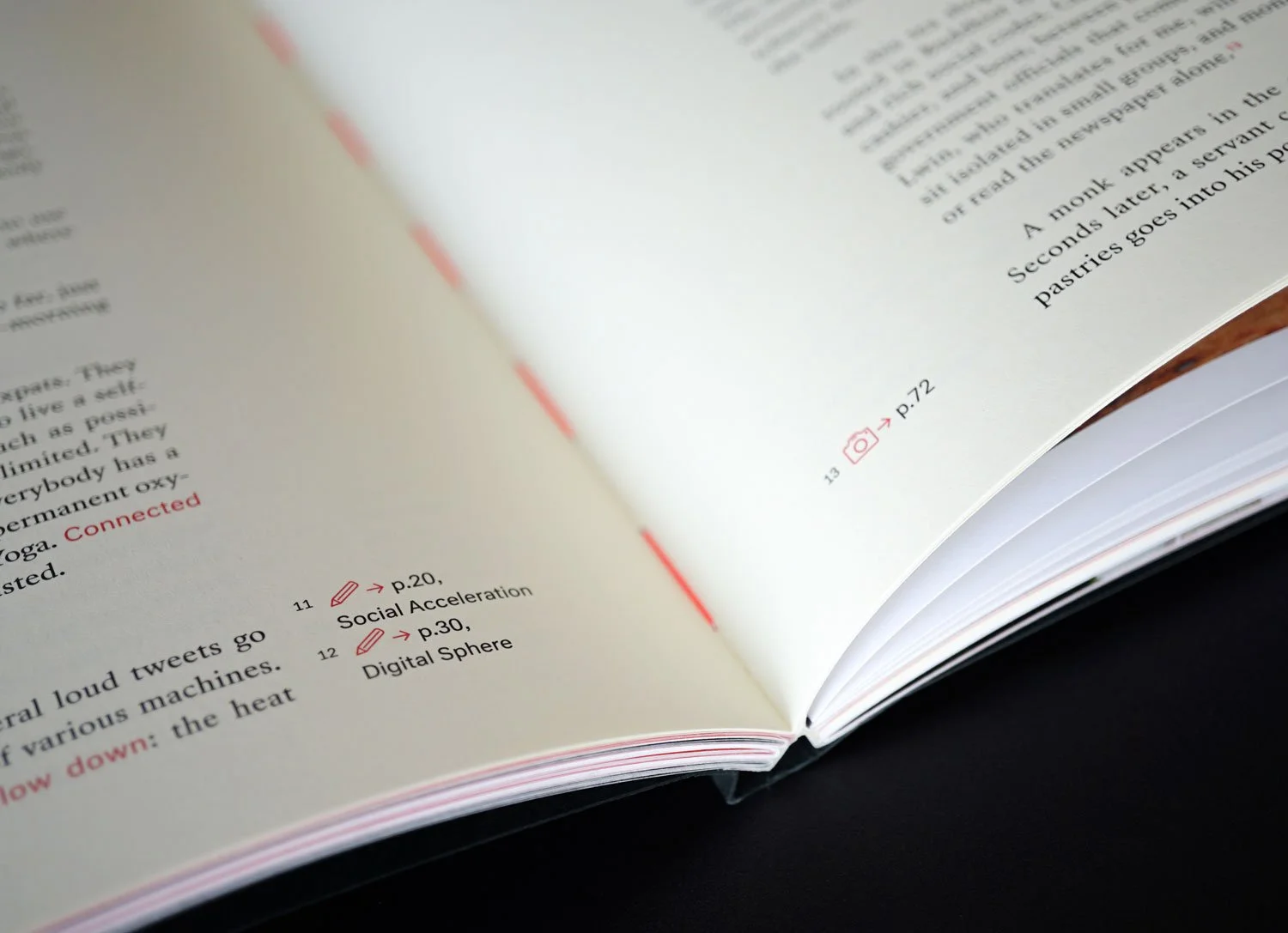
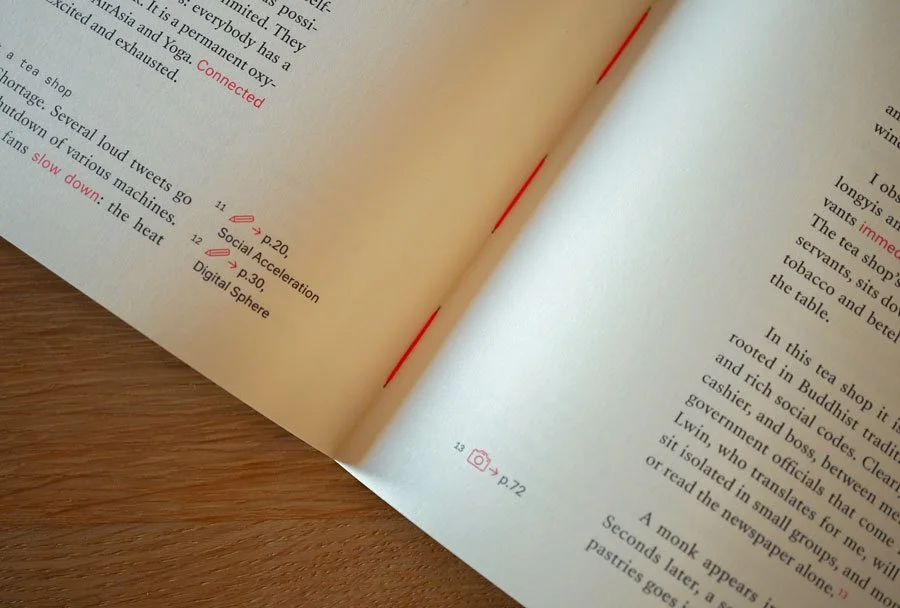
Linking across the book
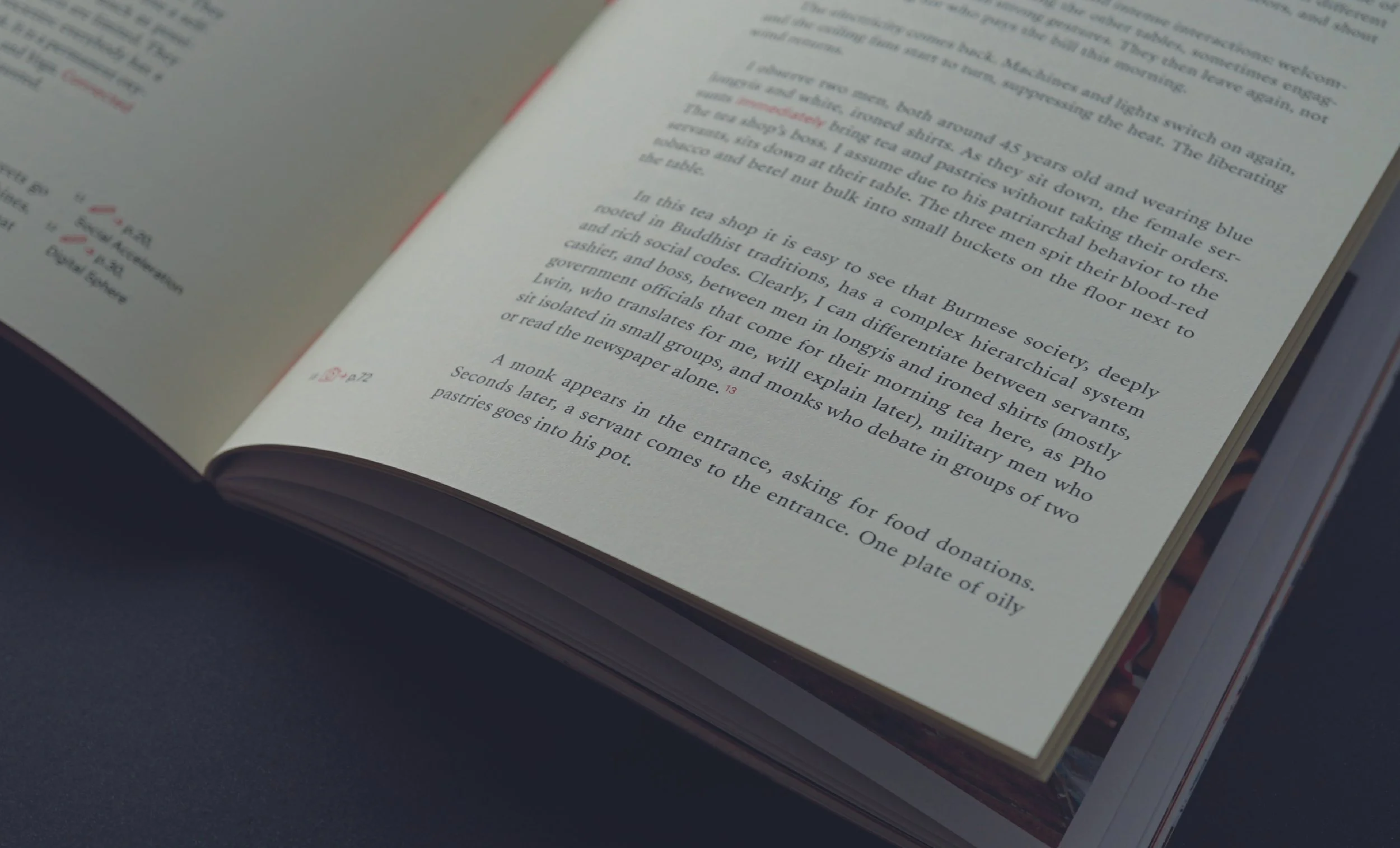
By providing links throughout both volumes — pathways between observations and insights — we make the logic behind the book transparent and build up readers’ confidence in inferring and deducing from their own experiences.
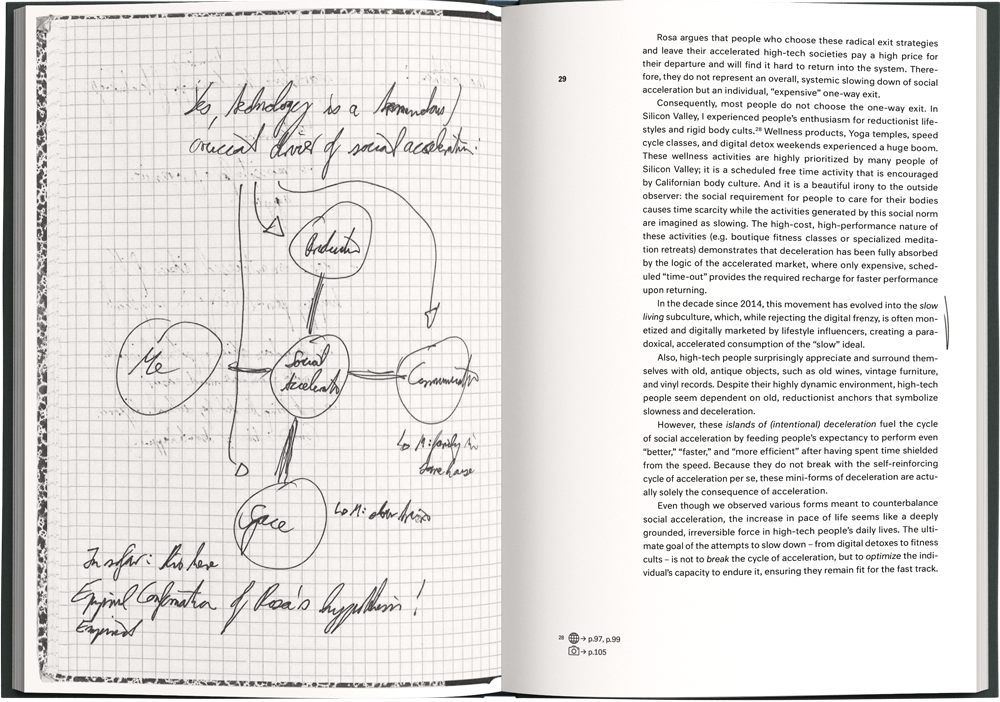
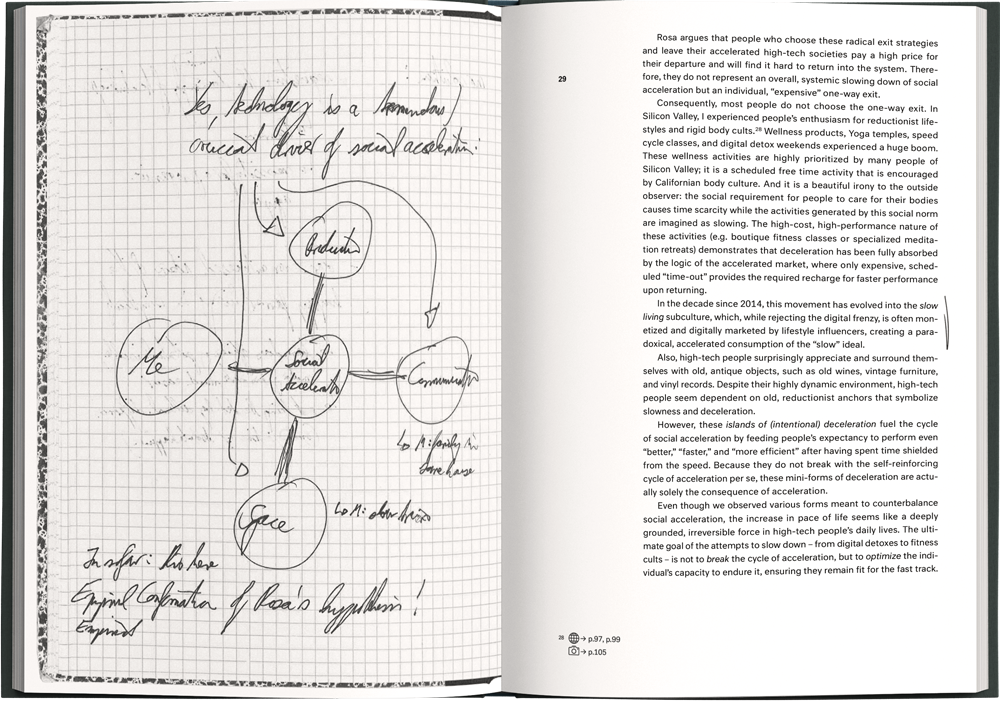
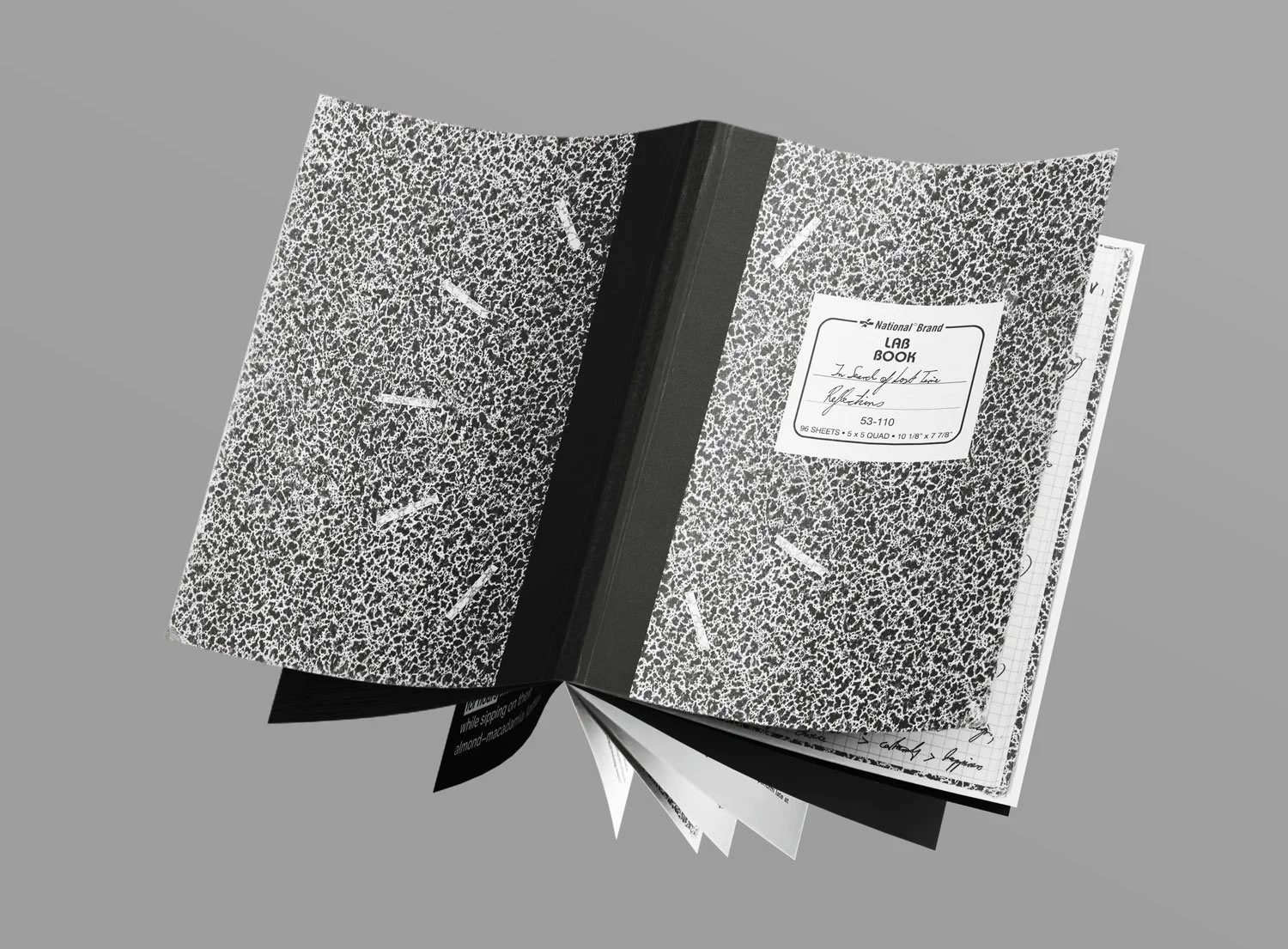
Including hand-drawn graphs and charts
By presenting the researcher’s hand drawn graphs and schematics from fieldwork, we show the evolution of the book’s themes from their rawest origins and encourage readers to sit with their untamed ideas.